Home » South Bay Foundation Guide: Slabs, Seismic Safety & Deck Footings
Get Your Free Estimate
Fill out the form below. We reply within 24 hours.
ON THIS PAGE
- Foundation
South Bay Foundation Guide: Slabs, Seismic Safety & Deck Footings
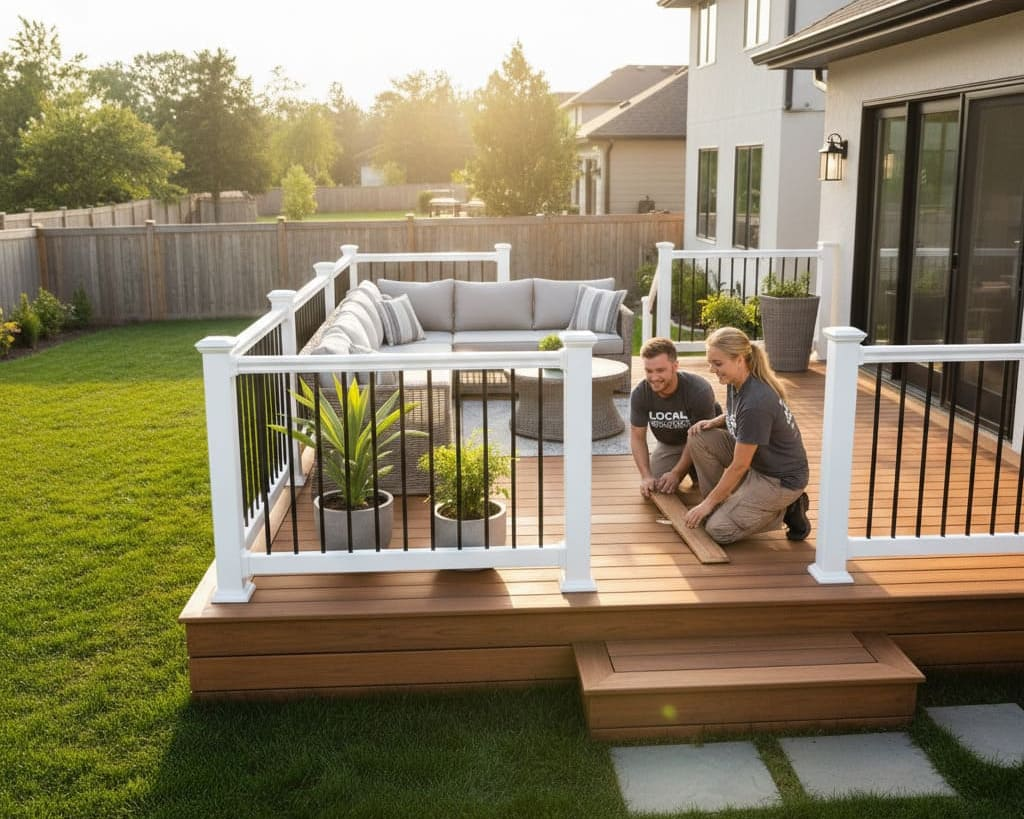
In any construction project, we build from the ground up. The framing (the skeleton) needs something solid to stand on. That “something” is the foundation.
A home’s foundation has one primary job: to transfer the entire weight of the building safely and evenly onto the ground.
At GAGA US Construction, we view the foundation as the non-negotiable starting point of a home’s longevity. Whether we are working on a custom build in Manhattan Beach or an addition in Torrance, the requirement for a solid base remains the same. A small mistake here compromises the entire structure.
Part 1: The South Bay Soil Challenge
Before you understand concrete, you must understand the dirt. In the South Bay, we deal with two extreme soil conditions that dictate how we build.
1. The Beach Cities: Sand & Liquefaction
In Hermosa, Manhattan, and Redondo Beach, we often build on sand.
The Risk: Sand is stable when dry but can experience "Liquefaction" during a major earthquake. This is when shaking causes wet sand to act like a liquid.
The Fix: We often use deep footings or mat slabs that "float" on the surface to prevent the house from sinking unevenly.
2. "The Hill": Expansive Clay
In Palos Verdes, Rolling Hills, and parts of Torrance, we deal with clay.
The Risk: Clay is like a sponge. It expands when wet (lifting your house) and shrinks when dry (dropping your house). This constant movement cracks standard foundations.
The Fix: We use Caissons (Deep Friction Piles) drilled deep into bedrock to anchor the home against this movement.
Part 2: The Two Types of Home Foundations
Depending on when your home was built, you likely have one of these two systems.
Type A: Slab-on-Grade (Modern Standard)
This is standard for most modern homes and ADUs we build today. It is a single, thick “slab” of concrete poured directly onto a prepared base.
- Pros: incredibly stable and pest-resistant. Excellent for sandy soil.
- Cons: Plumbing is embedded in the concrete. A "slab leak" requires jackhammering the floor to fix.
Type B: Raised Foundation (The Crawl Space)
Common in pre-1980s homes in Redondo or Old Torrance. This consists of a perimeter concrete wall with a “crawl space” underneath.
- Pros: Easy access! You can crawl under the house to fix plumbing or run new electrical wires easily.
- The Danger (Seismic): Older raised foundations are notorious for collapsing during earthquakes if they haven't been retrofitted. The weak wooden "cripple walls" can snap, causing the house to slide off the foundation.
If your home has a raised foundation built before 1980, it likely needs Bolting and Bracing. We install metal anchors to bolt the wood frame to the concrete and plywood shear panels to brace the walls. This is the #1 safety upgrade for South Bay homeowners.
Part 3: Deck Foundations (The Most Common Failure)
This is where DIYers and “handyman” builders get it wrong. A deck is a heavy structure that needs its own foundation. You cannot simply rest it on concrete blocks.
The GAGA Standard: Concrete Piers
A footing is a concrete “pillar” poured into a deep hole. Its job is to anchor the deck and prevent it from heaving.
- Digging to Undisturbed Soil: You can’t just dig past the grass. We dig 18-24 inches deep until we hit hard, compacted subsoil. If you build on loose topsoil, your deck will sink.
- The "Post Base" Rule: We never bury wooden posts directly in concrete. Moisture will wick up and rot the wood. We embed a metal bracket (like a Simpson Strong-Tie) into the concrete so the wood sits above the ground, keeping it high and dry.
4 Signs Your Foundation is in Trouble
Given the shifting nature of our soil, don’t ignore these red flags:
- Stair-Step Cracks: Look for diagonal cracks in exterior stucco or drywall, especially around windows.
- Sticking Doors: A door that suddenly jams at the top is a sign the house is “racking” (twisting).
- Sloping Floors: If a marble rolls to one corner of the room, you have differential settling.
- Separating Chimney: If your chimney looks like it is leaning away from the house, call a professional immediately.
Conclusion: Build on Solid Ground
Your home’s foundation is its most important structural element. Whether you need a seismic retrofit for an older craftsman in Redondo or deep caissons for a new build in Palos Verdes, you need a team that understands local geology.
When you choose GAGA US Construction, you aren’t just getting a builder; you’re getting a partner who ensures your property is safe, stable, and built to last. Contact us today for a foundation assessment.
Frequently Asked Questions
Let's Build Something Lasting
Stop searching and start building. If you are ready to secure your home and boost your curb appeal, let’s talk. We are currently booking for the 2026 season.