Home » Patios by the Pool: Choosing Safe and Cool Paver Materials for Southern California
Get Your Free Estimate
Fill out the form below. We reply within 24 hours.
ON THIS PAGE
- Patio Installation
Patios by the Pool: Choosing Safe and Cool Paver Materials for Southern California
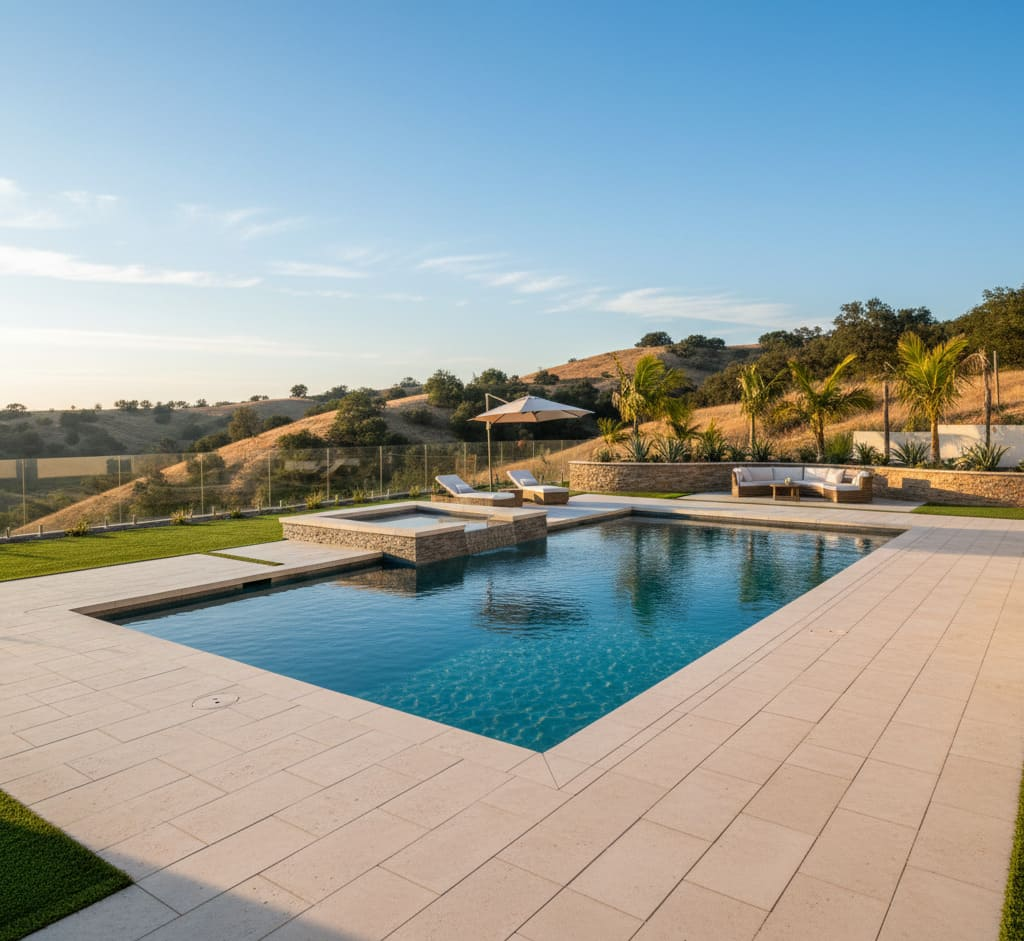
In Southern California, a pool is the centerpiece of the backyard. However, the material surrounding it—the pavers pool deck—is what determines if the space is truly functional. A beautiful deck that is scorching hot or dangerously slippery is a failed investment.
As professional hardscape installers, GAGA US Construction designs pool decks that are engineered for the realities of a SoCal summer. When selecting hardscaping materials for a pool, two factors override all others: Safety and Comfort.
The Two Pillars of a Pool Deck
These two critical goals are often in conflict:
- Safety (Slip Resistance): The surface must prevent accidents in a high-risk, wet, barefoot environment.
- Comfort (Heat Resistance): The material must remain cool enough for bare feet under the intense Long Beach sun.
A dark, textured paver might offer grip but will absorb sunlight and burn feet. A smooth white paver might stay cool but become a skating rink when wet. The perfect solution requires a technical understanding of materials.
The GAGA Safety Standard: Understanding DCOF
Most homeowners—and many contractors—are unaware of the technical metric that defines poolside safety: DCOF (Dynamic Coefficient of Friction).
While general industry standards cite a DCOF of ≥ 0.42 for wet areas (the standard for interior floors), this is not the standard GAGA US Construction follows for pools.
The GAGA Standard: For high-risk, barefoot zones, we adhere to ANSI A326.3 and NFSI B101.3 standards, requiring a wet DCOF rating of ≥ 0.60. We insist on this higher traction level to ensure your family’s safety.
Material Showdown: Best Pavers for SoCal
With our ≥ 0.60 DCOF safety standard in mind, here is our analysis of the top three materials for a pavers pool deck.
| Material | Safety (Wet DCOF) | Heat Comfort | Maintenance |
|---|---|---|---|
| Porcelain Pavers (The Modern Choice) |
Excellent | Good (Light Colors) | Zero (Non-Porous) |
| Travertine (The Natural Choice) |
Good (Natural Texture) | Excellent (Stays Cool) | High (Needs Sealing) |
| Concrete Pavers (The Budget Choice) |
Good (Textured) | Poor (Absorbs Heat) | Medium (Sealing rec.) |
1. Travertine (Natural Stone)
The classic choice. Its naturally porous surface stays cool to the touch even in direct sun. However, that same porosity means it requires regular sealing to prevent staining from pool chemicals or spills.
2. Porcelain Pavers
The performance champion. These are engineered to be non-porous (stain-proof) and often feature high-texture finishes specifically designed for high DCOF ratings. They never require sealing.
3. Concrete Pavers
The versatile option. While affordable and durable, concrete absorbs heat. If choosing concrete, light colors are mandatory for a pool deck to avoid burning feet.
Design Integration: The "Pool with Turf Around It" Solution
The best pool decks often combine materials to maximize function. By integrating strips of artificial turf, you create a pool with turf around it design that solves heat and comfort issues.
- Guaranteed Comfort: Turf strips provide a cool path and softness underfoot, even when stone pavers warm up.
- Heat Reduction: The green turf absorbs less heat than solid hardscape, reducing the ambient temperature of the deck.
- Functional Zones: A dedicated "Turf Lounge Area" is perfect for furniture—it is soft, cool, and won't scratch your lounge chairs like stone might.
This same design approach applies when creating a modern concrete patio and turf layout for any part of your yard.
Common Questions About Pool Decking
Let's Build Something Lasting
Stop searching and start building. If you are ready to secure your home and boost your curb appeal, let’s talk. We are currently booking for the 2026 season.