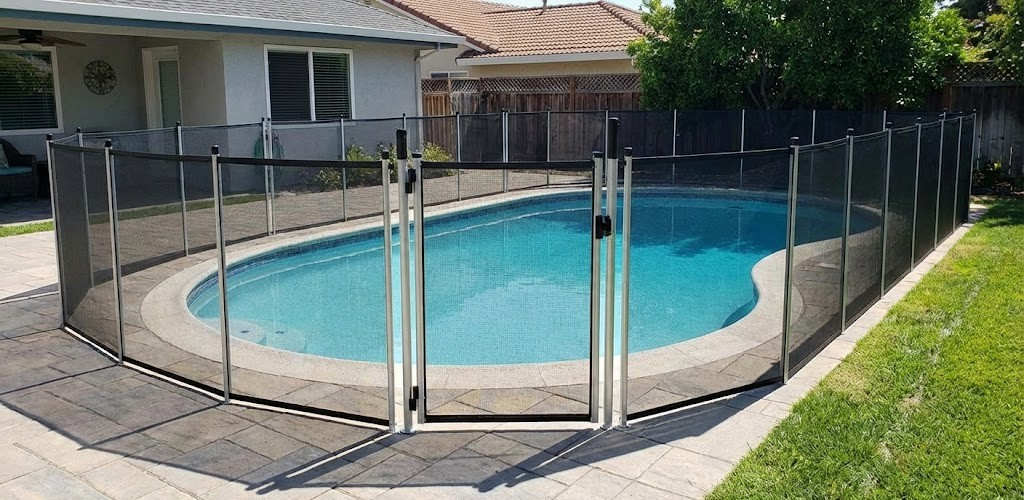
For the Los Angeles homeowner, a swimming pool is the quintessential backyard feature—a center for leisure, exercise, and social gatherings. However, beneath the shimmering surface of that backyard oasis lies a significant responsibility. Drowning remains the leading cause of accidental death for children under the age of five in California. This grim statistic has driven the state to implement some of the strictest safety codes in the nation.
While glass fencing offers luxury aesthetics, and automated covers provide sleek closure, mesh pool fencing has emerged as the most pragmatic, versatile, and widely adopted solution across Southern California. It strikes a critical balance: it is engineered to meet rigorous safety standards, it is removable for adult-only events, and it costs a fraction of permanent glass or iron structures.
Yet, selecting a mesh pool fence in Los Angeles is not as simple as buying a product off the shelf. The region’s unique regulatory environment—specifically the distinction between City and County codes—and its harsh environmental factors (intense UV radiation and Santa Ana winds) demand a specific caliber of product. This guide provides a deep technical analysis of mesh pool fencing systems, helping you navigate compliance, engineering, and installation to secure your property effectively.
1. The Regulatory Reality: SB 442 and Local Compliance
Before discussing materials or aesthetics, it is vital to understand the legal framework governing your pool. In California, pool safety is dictated by the Swimming Pool Safety Act, specifically Senate Bill 442 (SB 442).
The "Two-Device" Rule
Under SB 442, when you build a new pool or permit a remodel, you are required to equip the pool with at least two of seven approved drowning prevention safety features. A mesh pool fence is explicitly listed as one of these approved devices, provided it meets the ASTM F2286 standard. This makes mesh pool fencing a strategic choice for homeowners who need to pass inspection without relying solely on door alarms (which are often disabled by frustrated residents) or expensive automated covers.
The Los Angeles City "Permanence" Trap
If you live within the City of Los Angeles, the rules are more complex. The Los Angeles Department of Building and Safety (LADBS) historically mandated that pool enclosures be "permanent." This created a conflict with mesh pool fencing, which is designed to be removable.
To bridge this gap, specific manufacturers have developed modifications to satisfy the city's definition of permanence. This is managed through the Los Angeles Research Report (LARR) system. A mesh pool fence installed in the City of LA as a primary barrier must have a valid LARR number.
The Locking Deck Sleeve
Manufacturers like Guardian Pool Fence Systems (LARR #25900) and All-Safe (LARR #25987) achieved compliance by engineering a "locking deck sleeve." Unlike standard friction-fit poles, these systems require a tool (usually a screwdriver or hex key) to release the pole from the ground. This satisfies the city's requirement that the fence cannot be removed by a child or without tools.
Permit Implications: If you install a generic mesh pool fence bought online that lacks an LARR number, you risk failing your final building inspection. Always verify the LARR status with your installer if you are within city limits.
2. Engineering for the Environment: Wind, Sun, and Stability
Southern California presents a unique set of environmental stressors that a safety barrier must withstand. A mesh pool fence is essentially a sail; when the Santa Ana winds howl through the canyons at 60 mph, the fence must endure significant lateral load without failing.
Pole Metallurgy: Aluminum vs. Fiberglass
The structural backbone of a mesh pool fence is the pole. The industry is divided between two primary materials, each with distinct behaviors under load.
Marine Grade Aluminum (6063-T6): The majority of premium systems use extruded 6063-T6 aluminum poles. The "T6" designation indicates a heat-treatment process that maximizes tensile strength.
Reinforcement: To prevent bending during high winds or accidental impact (like a falling teenager), leading brands use reinforced internal geometries. For example, Life Saver utilizes a "Solid Pole" design with triple-layer walls, while Guardian employs a "Tri-Core" reinforcement. Aluminum is predictable; it is rigid and holds high tension, which keeps the mesh tight and attractive.
Fiberglass Composites: Fiberglass poles are marketed for their flexibility. In a high-wind event, a fiberglass pole will flex significantly and then snap back to its original position, whereas an aluminum pole might suffer permanent deformation (bending) if the yield strength is exceeded. However, fiberglass can suffer from UV degradation over long periods ("blooming"), where fibers become exposed. Modern high-end fiberglass poles use UV-inhibited resins to mitigate this.
The Mesh: Textilene® Durability
The fabric itself must be virtually indestructible. The industry standard is Textilene® mesh, a woven fabric made of a high-tenacity polyester core coated in polyvinyl chloride (PVC).
- Tensile Strength This material is engineered to have a burst strength of over 380 pounds per square inch. It is designed to pass the "bowling ball test," where the fence must survive a direct impact without tearing.
- UV Resistance The PVC coating acts as a shield against the relentless LA sun. Without this UV stabilization, standard polyester would become brittle and rip within two summers.
- Transparency For homeowners concerned about preserving their view, "interlock" wire weaves or lower-density weaves (like 5-strand vs. 10-strand) offer higher transparency. Black mesh is counter-intuitively the most transparent color to the human eye, as it absorbs light rather than reflecting glare.
3. The Mechanics of Safety: Gates and Latches
A fence is only as safe as its gate. The days of manual "hook and eye" closures are over. Modern code compliance requires a gate that is self-closing, self-latching, and key-lockable.
The MagnaLatch® Standard
Almost every compliant mesh pool fence in Los Angeles utilizes the MagnaLatch® system manufactured by D&D Technologies.
- Magnetic Trigger Unlike mechanical latches that can jam due to friction or rust, the MagnaLatch uses a permanent magnet to draw the bolt into the keeper. It is reliable and resistant to the jamming that plagues older hardware.
- Height Requirement Code dictates that the release mechanism must be located at least 54 inches (and often 60 inches in some jurisdictions) above the ground. The MagnaLatch features a vertical extension knob that places the release well out of a toddler's reach.
Hydraulic Hinges vs. Spring Hinges
Standard spring hinges can slam a gate shut, which eventually loosens the fence poles in the deck. Premium installations now use hydraulic hinges (like TruClose® heavy-duty models) that dampen the closing speed, ensuring the gate closes gently but securely every time. This soft-close action extends the lifespan of the entire mesh pool fence system by reducing repetitive impact stress.
4. Comparative Market Analysis: Mesh vs. Glass vs. Iron
Why choose mesh pool fencing over other barriers? The decision usually comes down to three factors: cost, maintenance, and versatility.
Maintenance: Low (Hose off)
Safety: Excellent (No footholds)
Feature: Removable in 15 mins.
Maintenance: High (Hard Water Risk)
Safety: Excellent (No footholds)
Feature: Permanent, Luxury Aesthetic.
Maintenance: Medium (Paint/Rust)
Safety: Good (Spacing risks)
Feature: Permanent, Traditional look.
The Hard Water Factor: Los Angeles has hard water. Glass fencing requires constant cleaning to prevent calcium deposits (etching) that turn the clear panels white and hazy. A mesh pool fence is immune to this; the fabric texture hides water spots and requires only an occasional rinse to remove dust.
Seismic Safety: In an earthquake, a rigid glass fence can shatter or crack its concrete footing. A mesh pool fence is a tension-based system; it moves with the ground. If the deck heaves, the poles may shift, but the barrier generally remains intact and functional.
5. Installation Logistics: What to Expect
Installing a mesh pool fence is a precision construction task. It is not recommended as a DIY project for novices due to the complex drilling required.
Core Drilling the Deck
The installation requires drilling holes (typically 1⅛” or 1¼” diameter) into your pool deck to accept the polymer sleeves that hold the poles.
- Concrete: Installers use water-cooled diamond core drills to cut clean holes without cracking the slab.
- Pavers: Installing on pavers is more expensive (adding $1-$15/ft) because pavers are not stable anchors. The installer must typically drill through the paver and into a concrete footing below, or use longer sleeves to bridge the instability.
- Earth/Grass: If the fence crosses a planter, the installer must pour concrete footings underground to anchor the poles securely.
Custom Layouts and Tension
The fence relies on tension to stand straight. A "straight line" run of mesh pool fence is actually weaker than a curved run. Installers will often design slight angles or curves into the layout to increase structural rigidity (bi-lateral tension). The fence sections usually come in 10 or 12-foot lengths, which are cut to fit your specific yard geometry.
Storage and Removal
One of the primary selling points is removability. An adult can remove a standard 12-section mesh pool fence in about 10-15 minutes. The sections roll up like a rug for easy storage in the garage. When the fence is down, plastic deck caps are inserted into the sleeves to prevent debris from clogging the holes and to preserve the look of the patio.
6. Cost Analysis for Los Angeles Homeowners (2025)
Investing in a mesh pool fence is the most cost-effective way to achieve code compliance.
- Average Project Cost For a typical Los Angeles pool (approx. 100 linear feet), expect to pay between $1,500 and $4,000.
- Gate Cost The self-closing gate is the most expensive single component, typically costing $300 - $500.
- DIY vs. Pro DIY kits are available for $12-$22/ft, but they often lack the reinforced poles and heavy-duty latches of professional grades. Furthermore, improper drilling can ruin your pool deck. Given the liability involved with drowning, professional installation is strongly recommended to ensure the barrier performs when it matters most.
Conclusion
In the diverse landscape of Los Angeles real estate, from the hills of Sherman Oaks to the coastal bluffs of Palos Verdes, mesh pool fencing stands out as the superior safety solution. It offers the legal compliance required by the city and state, the durability to withstand the local climate, and the flexibility to adapt to your lifestyle.
While it may not have the "invisible" allure of glass, it avoids the maintenance nightmares of hard water stains and the high costs of construction. More importantly, it provides a proven, climb-resistant barrier that keeps your family safe. When you are ready to secure your pool, look for a local dealer offering LARR-approved systems like Guardian or Life Saver, and insist on ASTM F2286 certification. Your peace of mind is worth the investment.