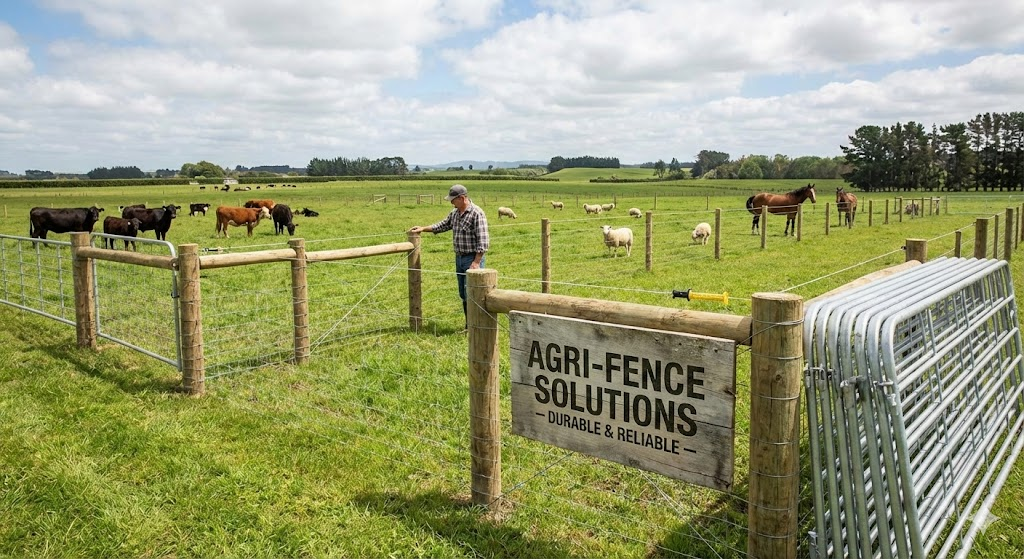
The agricultural landscape of Los Angeles County represents a complex paradox of land use. Historically the nation's most productive agricultural county until the mid-20th century, the region has transformed into a mosaic of dense urbanization, high-value equestrian estates, and vast, arid rural expanses in the Antelope Valley. Today, the infrastructure supporting this sector—specifically livestock and agricultural fencing—operates under one of the most rigorous regulatory and environmental frameworks in the United States.
This report provides an exhaustive analysis of the agricultural fencing sector in Los Angeles County for the 2025-2026 period. It synthesizes data regarding zoning ordinances (Title 22), fire safety codes (VHFHSZ), material engineering, wildlife corridor mandates, and economic cost modeling. The analysis reveals a market in transition: traditional wood fencing is being systematically phased out in favor of tubular steel and non-combustible materials due to strict Wildland-Urban Interface (WUI) fire codes.
1. Historical Context and Current Landscape
To understand the specific fencing needs of Los Angeles County, one must first understand the devolution and resilience of its agricultural footprint. From 1910 to 1955, Los Angeles County was the premier agricultural producer in the United States. By the 21st century, the agricultural footprint had shrunk to approximately 0.2% of land use, yet it remains economically significant.
Current trends dictate specific infrastructure needs:
- Consolidation: Larger average farm sizes (90 acres) in the Antelope Valley drive demand for cost-effective perimeter fencing like barbed wire.
- Equestrian Dominance: With over 4,400 horses reported, the equestrian sector is the primary consumer of safety-oriented fencing (pipe, no-climb mesh).
2. Regulatory Framework: Title 22 and Zoning
The installation of agricultural fencing is governed by a labyrinthine set of codes, primarily Title 22 of the County Code. Navigating these is the first step in infrastructure planning.
2.1 Agricultural Zones (A-1 and A-2)
In Zones A-1 and A-2, fencing is classified as "incidental" to the permitted use of raising livestock. Code Section 22.16.030 allows property owners to install functional livestock containment (e.g., 4-5 foot wire fences) in areas where a 3.5-foot decorative fence would typically be the maximum.
2.2 The 35-Foot and 50-Foot Setback Rules
Perhaps the most litigated regulation is the animal structure setback. Any structure used for housing animals, which legally includes corrals and fencing, must be established at least 35 feet from any residence (including neighbors) and 50 feet from any street.
2.3 The "K" (Equine Keeping) Districts
Within the City of Los Angeles (e.g., Sylmar, Shadow Hills), the "K" District overlay requires administrative clearance. No building permit for equine structures will be issued without a completed "Equine Keeping Checklist" and a dimensioned site plan verifying distances.
3. The Fire-Fencing Nexus: WUI Compliance
In Los Angeles County, fire safety is a rigid legal code enforced by the Fire Department, particularly in Very High Fire Hazard Severity Zones (VHFHSZ). Fencing is now scrutinized as a potential "fuel bridge" or "wick" that can carry fire from the wildland directly to the home.
3.1 Defensible Space Zones
Zone 0 (0–5 Feet): The immediate 5-foot perimeter around any structure must be free of combustible materials. Combustible fencing (wood) is prohibited from attaching directly to the structure. The connection must be made with non-combustible returns like tubular steel or masonry.
3.2 Material Performance in Fire
Wood: Highly vulnerable. Embers can lodge in cracks, igniting the fence line hours after a fire front passes.
Tubular Steel (Pipe): The preferred material. It does not ignite, maintains structural integrity under heat, and is universally recommended by LA County Fire.
4. Material Engineering and Environmental Suitability
4.1 Tubular Steel (Pipe) Fencing
Tubular steel is the premier standard. Often sourced from recycled oilfield pipe (2-7/8 inch O.D.), "continuous" fencing where rails are welded on-site offers superior strength compared to clamped panels. In coastal zones, this requires powder coating; in the Antelope Valley, oil-based paint suffices.
4.2 High-Tensile Woven Wire
For large acreages, woven wire is standard. However, the knot type matters.
- Square Deal / Fixed Knot: Vertical wires are continuous and locked. This prevents vertical collapse if an animal stands on it.
- Hinge Joint: Acts as a hinge. While cheaper, it sags over time and allows predators to separate the wires.
4.3 Vinyl (PVC) Fencing
Premium agricultural vinyl utilizes UV inhibitors (Titanium Dioxide) to prevent chalking. Unlike wood, vinyl can shatter upon heavy impact. "Ranch Rail" vinyl often requires an electric offset wire to prevent animals from leaning on it.
5. Livestock-Specific Fencing Solutions
5.1 Equine Fencing
Horses rely on flight for defense, requiring high visibility. The industry standard is 2" x 4" "No-Climb" woven wire to prevent hoof entrapment. Commercial stables generally require a minimum height of 6 feet.
5.2 Small Ruminant (Goat) Fencing
Standard 6x6 field fence is dangerous as goats can get their heads trapped. 4x4 mesh is the required standard. Fences must be at least 48 inches high to prevent jumping.
5.3 Cattle Fencing
California Food & Agricultural Code 17121 defines a "lawful fence" as three tightly stretched barbed wires. Possessing this minimum standard is critical for liability defense in open range scenarios.
6. Wildlife Connectivity vs. Biosecurity
New Wildlife Ordinances in the Santa Monica Mountains place restrictions on fencing to prevent habitat fragmentation, creating a conflict with biosecurity.
6.1 The "Segmented" Solution
The emerging best practice is a two-tier system:
- Inner Sanctum: A small, highly secure, non-permeable "night pen" (pipe or tight mesh) near the barn for sleeping livestock.
- Outer Perimeter: A wildlife-permeable fence (smooth bottom wire, 18" clearance) for the property boundary.
7. Economic Analysis and Cost Modeling (2025-2026)
| Fencing Type | Total Installed Cost / LF | Lifecycle Rating | Best Use Case |
|---|---|---|---|
| Barbed Wire (4-5 Strand) | $4.25 – $8.50 | Medium | Large grazing acreage (Antelope Valley) |
| Woven Wire (Field Fence) | $5.50 – $11.00 | High | Cattle/Sheep perimeter |
| No-Climb Horse (w/ Top Rail) | $8.50 – $16.00 | Very High | Equine paddocks, dog containment |
| Tubular Steel (Pipe) | $21.50 – $40.00 | Excellent | Corrals, Fire Zones, High-Wind Areas |
| Vinyl (Ranch Rail) | $14.00 – $27.00 | High | Residential/Equestrian aesthetic |
8. Strategic Recommendations
- Future-Proof with Pipe: In any VHFHSZ, tubular steel is the only material that offers long-term resilience against fire.
- Verify Setbacks: Always verify the 35-foot "unsupervised enclosure" distance to neighboring habitable structures before digging.
- Invest in Class 3 Galvanization: For any property within 10 miles of the coast, specify Class 3 wire. Standard Class 1 wire will fail within a decade.