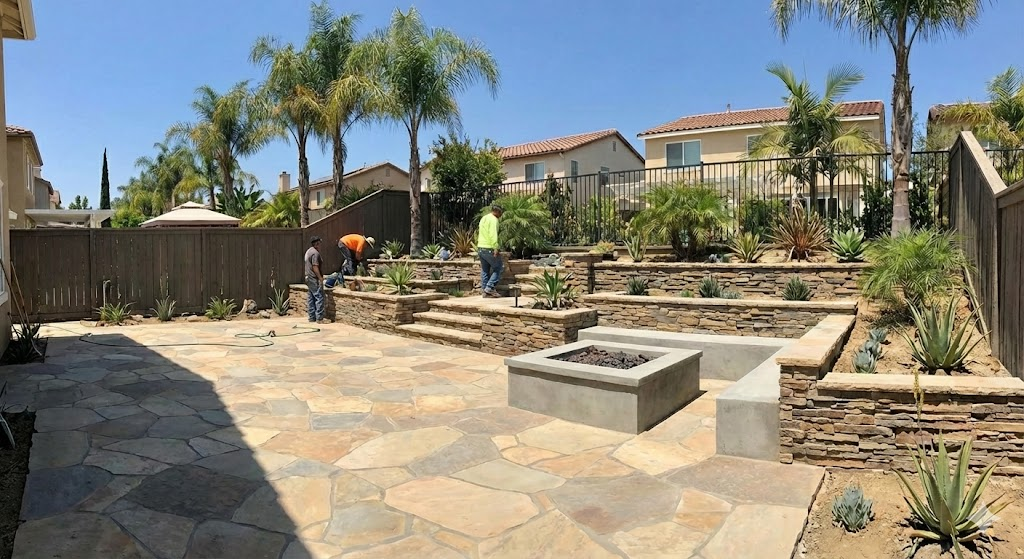
If you own a home in Los Angeles, you know the climate has changed. We are no longer just dealing with eternal sunshine; we are oscillating between intense heat waves and sudden, atmospheric river storms. This shift has fundamentally altered how we approach hardscaping Los Angeles properties in 2025.
A decade ago, hardscaping was cosmetic. You picked a stone you liked, and we laid it down. Today, that approach is obsolete. Modern hardscaping sits at the intersection of civil engineering and environmental survival. It’s about managing water, reducing heat, and navigating a complex web of city regulations that can stall a project for months if not handled correctly.
At GAGA US Construction, we have analyzed the 2025 industry shifts. Here is the reality of building in LA today.
The Regulatory Cliff: It’s Not Just a Patio Anymore
The single biggest shock for homeowners this year is the Bureau of Engineering. The "Low Impact Development" (LID) Ordinance has changed the math on renovations.
The city effectively treats your backyard like a mini-water treatment plant. They don't want stormwater hitting the street; they want it captured on your land. This triggers a specific regulatory "cliff" that you need to be aware of:
- The 500 Sq. Ft. Trap Many homeowners think they can repave a driveway without a permit. Wrong. If you touch 500 square feet or more of impervious surface, you trigger a requirement for an engineered drainage plan.
- The Renovation Risk If your project alters more than 50% of the existing hardscape on your lot, you are legally required to retrofit the entire property to meet 2025 standards. This can double your budget overnight if not planned strategically.
Heat Mitigation is the New Luxury
In the San Fernando Valley and inland areas, surface temperatures on traditional concrete can hit 140°F in summer. That makes your outdoor space unusable for three months of the year. The trend for 2025 is focused on "Cool Pavement" technology.
The Science of Reflection
We are moving away from dark slate and asphalt. The new standard is High SRI (Solar Reflectance Index) materials. We use light cream porcelain pavers and specialized "CoolSeal" coatings for driveways. These materials reflect solar radiation rather than absorbing it, dropping surface temperatures by up to 20°F. It’s the difference between burning your feet and walking comfortably to the pool.
The Hillside Variable
For our clients in the Hills, the challenge is gravity. Los Angeles has cracked down on the "canyon effect" of massive retaining walls. The days of building a single 20-foot concrete wall are over.
The current code limits a single retaining wall to 12 feet. If you need to go higher, we must terrace the design—using two shorter walls separated by 3 feet of planting space. This requires intricate grading and a discretionary approval process that demands an experienced team to navigate.
How GAGA US Manages Compliance & Construction
Because the barrier to entry has become so technical, the "guy with a truck" model doesn't work for hardscaping Los Angeles anymore. You need a workflow that prioritizes engineering first.
The Cost of Doing it Right
Let's be transparent about the market. High-end hardscaping in Los Angeles involves substantial "invisible" costs—demolition, hauling, grading, and drainage.
While you might see paver costs advertised at $15/sq ft, a fully engineered, permitted, and warrantied project in 2025 typically lands between $35 and $65 per square foot depending on site access and material luxury. But unlike interior decor, this is an investment in the usable footprint of your home. In a city where land is gold, unlocking your backyard is the smartest equity move you can make.
Build for the Future
The rules have changed, but the potential for a breathtaking outdoor living space hasn't. It just requires a smarter approach. At GAGA US Construction, we don't just pour concrete; we engineer solutions that satisfy the city and delight the homeowner.