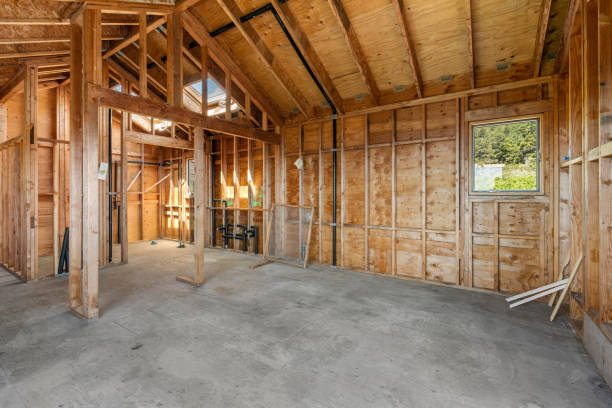
The San Fernando Valley is one of the hottest ADU markets in Los Angeles, and most homeowners choosing between a garage conversion and a detached ADU are really asking one question: which option gives me the strongest long‑term return on investment on a typical Valley lot?
To answer that, you have to look beyond headline construction costs and compare foundations, structural scope, permitting timelines, and realistic rental income for common SFV unit sizes.
SFV Context: Lot Sizes, Zoning, and Demand
Most single‑family lots in the San Fernando Valley have a detached or attached 1–2 car garage, driveway access, and enough rear yard depth to accommodate at least a modest detached ADU while still meeting California’s 4‑foot rear and side yard setback rules.
Rental demand in the Valley is driven by price‑sensitive tenants who still need access to job centers over the hill, and smaller 1–2 bedroom ADUs with parking or near transit tend to remain highly competitive on the market.
Option 1: Garage Conversion ADU in the San Fernando Valley
A garage conversion ADU repurposes your existing garage shell into a legal dwelling unit, which means you reuse the footprint, exterior walls, and roof rather than starting from scratch.
Because the structure is already standing, most of your budget goes into interior build‑out, structural upgrades, and bringing the envelope up to current building and energy code rather than new foundations and framing.
Foundation and Structural Requirements
The biggest technical question for a San Fernando Valley garage conversion is whether the existing foundation and slab can be upgraded cost‑effectively to meet today’s residential standards.
- Existing slabs often need localized underpinning, thickening, or added footings at load‑bearing walls, but you typically avoid the cost of a fully new, engineered ADU foundation.
- Framing may need reinforcement, new headers for widened openings, and full insulation in walls and roof, yet these scopes are still lighter than an all‑new detached structure.
- Because the garage is already close to the main house, utility tie‑ins for sewer, power, and water usually require shorter trench runs and fewer site disruptions.
Timeline: How Fast Can You Finish?
On average, garage conversions in Los Angeles‑area jurisdictions move faster than detached ADUs because the footprint and basic shell are already defined on site.
- Design and engineering are streamlined around an existing box, so plan sets are simpler and plan check tends to be more predictable.
- Construction often focuses on interior rough‑ins, windows, insulation, and finishes, allowing many garage conversions to complete in roughly 4–8 months from permit issuance, depending on scope and contractor availability.
- Fewer site grading, drainage, and foundation inspections can shave weeks off the inspection sequence compared to a ground‑up ADU.
Typical SFV Costs and Rental Income
Because you reuse the shell, cost per square foot for a garage conversion in Los Angeles commonly runs well below a detached ADU, often in the $200–$300 per square foot range rather than ground‑up rates.[web:28][web:30]
- A standard two‑car garage in the Valley (around 350–450 square feet) frequently pencils out in the roughly $125,000–$200,000 total budget band depending on finishes and structural upgrades.[web:28][web:30]
- At typical SFV rents, a well‑designed studio or one‑bedroom ADU in this size range can often command monthly rents aligned with local small‑unit market or voucher standards for the ZIP code, which commonly place 1–2 bedroom payment standards in the low‑to‑mid $2,000s per month.[web:23]
For many Valley homeowners, that math translates into a comparatively low entry cost and a strong gross rent‑to‑cost ratio, especially when financed over the long term.
Option 2: Detached ADU in the San Fernando Valley
A detached ADU is a new, stand‑alone dwelling built in your back yard, which offers more design freedom and privacy but carries a heavier structural and permitting load.
On typical SFV lots, you will position the unit at least 4 feet off rear and side property lines, manage access from the street, and coordinate placement with existing pools, trees, or slopes.
Foundation and Structural Requirements
Detached ADUs in the San Fernando Valley require a completely new, engineered foundation system and framing package, which is where most of the additional cost and complexity lives.
- You will pour a new slab or footings that meet current structural, seismic, and energy requirements, often with integrated raised stem walls or thickened edges depending on soil conditions.[web:27][web:31]
- Because you are not constrained by a garage box, you can design more efficient floor plans, higher ceilings, covered patios, and better window placement for light and privacy.
- Detached units require independent roof framing and full weatherproofing, plus longer utility runs across the yard for sewer, water, power, and potentially gas, which increase both labor and inspection points.[web:27][web:31]
Timeline: How Long Does It Take?
Detached ADUs almost always take longer than garage conversions because they trigger more technical reviews and inspections from Los Angeles‑area building departments.
- Design and plan check must cover grading, new foundation engineering, utility routing, and site drainage, so the pre‑construction phase alone can add months compared to a simple conversion.[web:27][web:31]
- Construction must sequence foundation, underground utilities, framing, rough inspections, exterior finishes, and interior build‑out, which commonly places detached ADUs in the 9–14 month window from permit to completion.[web:31]
Typical SFV Costs and Rental Income
Because you are building from scratch, detached ADUs in Los Angeles frequently land in the $350–$450 per square foot cost range, reflecting new foundations, framing, and longer utility runs.[web:28][web:29]
- A 500–800 square foot one‑ or two‑bedroom detached ADU in the Valley can easily reach total project costs in the $200,000–$350,000+ range depending on size, finishes, and site conditions.[web:28][web:29]
- In return, these larger, more private units can pursue higher rents, often tracking Section 8 and market payment standards where two‑bedroom Valley units commonly sit around or above the mid‑$2,000 per month range.[web:23][web:25]
On larger SFV lots, a detached ADU often feels like a true “back house” with its own yard and entry, which can support stronger tenant demand and longer leases than a smaller converted garage.
Side‑by‑Side ROI Comparison for SFV Owners
| Factor | Garage Conversion ADU (SFV) | Detached ADU (SFV) |
|---|---|---|
| Foundation & structure | Reuses existing slab and walls; targeted upgrades to foundation and framing instead of full new structural system.[web:27][web:28][web:30] | Requires completely new engineered foundation, framing, and roofing; more inspections and seismic detailing.[web:27][web:28][web:31] |
| Typical SFV project cost | often around $125,000–$200,000 for a 2‑car garage conversion depending on scope.[web:28][web:30] | commonly $200,000–$350,000+ for a 500–800 sq ft detached unit at $350–$450/sq ft.[web:28][web:29] |
| Timeline | Streamlined; many projects complete in roughly 4–8 months from permit to move‑in.[web:29][web:31] | Longer; new foundations and site work push many builds into the 9–14 month range.[web:27][web:31] |
| Typical size on SFV lot | Often 350–450 sq ft studio or compact 1‑bedroom within the existing garage footprint. | Commonly designed as 1–2 bedrooms at 500–800 sq ft, taking advantage of larger rear yard depth. |
| Rent potential | Strong for well‑located studios/1‑beds, often targeting entry‑level Valley rents in the low‑to‑mid $2,000s depending on submarket.[web:23][web:25] | Higher absolute rent potential for 1–2 beds, often in line with or above local 2‑bedroom payment standards and market rates.[web:23][web:25] |
| Privacy & tenant appeal | Shares more acoustics and circulation with the main house; best for singles or couples comfortable near the primary residence. | Feels like a small home with separate yard and entry; attractive to small families and long‑term tenants. |
| Impact on main house | Removes covered parking; may trigger lifestyle and insurance changes for owner vehicles. | Keeps garage parking intact; preserves flexibility and resale appeal for buyers who value parking. |
Which Strategy Delivers Better ROI on a Typical SFV Lot?
On smaller or mid‑sized San Fernando Valley lots, a garage conversion often wins on near‑term ROI because the lower construction cost, shorter timeline, and strong studio/1‑bed rents combine into a faster payback period.
On deeper Valley lots with room for a full backyard cottage, a detached ADU tends to deliver better long‑term value by preserving garage parking, offering more privacy, and tapping into higher 1–2 bedroom rent ceilings, even though the upfront cost and build time are higher.
The most accurate way to choose is to model both paths for your specific property: get rough structural and foundation opinions on your existing garage, price a conversion and a modest detached ADU at current SFV cost per square foot, then plug realistic neighborhood rents into a simple cash‑on‑cash and payback analysis before you commit.