In California, pool barriers are treated as critical life‑safety systems, so both frameless glass and mesh pool fencing must perform as compliant isolation barriers to pass inspection and protect children from unsupervised access.
State law and local SoCal jurisdictions apply strict rules for barrier height, gate behavior, gaps, and climb resistance, and inspectors evaluate frameless glass and mesh systems against the same core safety benchmarks rather than purely on appearance.
Core California Pool Barrier Requirements
Regardless of material, a compliant California pool barrier must typically stand at least about 60 inches tall from the outside, with no openings that allow a 4‑inch sphere to pass through or under the fence.
Gates must be self‑closing, self‑latching, and swing away from the pool, with latch mechanisms mounted high enough that small children cannot easily reach them.
Barriers must avoid easy footholds or ladder‑like elements, cannot rely on indoor access doors alone for safety, and are often expected to align with ASTM standards for pool fencing products.
Frameless Glass Pool Fencing
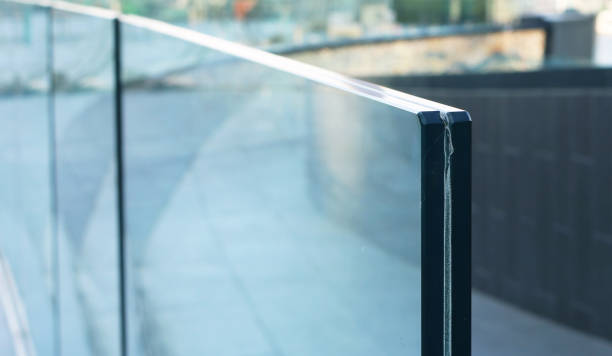
Frameless glass pool fencing uses thick tempered safety glass panels anchored in low‑profile mounts, delivering an almost invisible barrier that preserves views and creates a high‑end SoCal resort feel.
To satisfy California Title 24‑aligned safety expectations, glass fences are engineered to reach the required barrier height, maintain tight panel spacing and ground clearances, and keep surfaces smooth and unclimbable.
Glass gates integrate self‑closing hinges and self‑latching hardware, with latch releases positioned high off the ground so they satisfy gate safety rules while matching the minimalist look of the rest of the system.
Pros of Frameless Glass
- Uninterrupted views of the pool and landscape, ideal for modern coastal and hillside homes.
- Luxury appearance that can boost perceived property value and design cohesion with large sliders and window walls.
- Smooth, non‑porous surfaces that are easy to hose down and visually check for damage or tampering.
Considerations for Code Compliance
- Panels and mounts must be properly engineered for wind and impact loads to satisfy local structural and safety requirements.
- Any nearby steps, benches, or planters that create a climbing aid can cause the system to fail an inspection, even if the glass itself is tall enough.
- Changes in layout or height usually require new drilling, possible plan revisions, and coordination with the building department.
Mesh Pool Fencing
Mesh pool fencing is designed first and foremost as a child‑safety barrier, often tested to ASTM F2286 and accepted in California as one of the qualifying protective measures around residential pools.
These systems use climb‑resistant mesh panels stretched between slim posts, with openings small enough to prevent footholds and a fence height that generally targets the same 60‑inch safety benchmark used for rigid barriers.
Mesh fence gates are built to be self‑closing and self‑latching, to swing away from the pool, and to position latches high and protected so that young children cannot easily release them.
Pros of Mesh Pool Fencing
- Purpose‑built for child safety, with designs tuned around pool barrier standards and typical inspection checks.
- Usually more budget‑friendly than glass, making full isolation fencing attainable for more SoCal households.
- Removable and reconfigurable sections that allow seasonal changes or temporary openings for maintenance and events.
Considerations for Code Compliance
- The fence must be installed in a continuous loop that fully isolates the pool from the home and yard whenever it is in use.
- Posts must be securely anchored, and mesh tension maintained, so the barrier does not sag and create gaps that fail the 4‑inch sphere test.
- Because panels are removable, owners remain responsible for ensuring the barrier is in place and latched whenever children could be present.
Title 24‑Driven Expectations: Where Both Systems Overlap
California’s Title 24 building framework and related pool safety rules are concerned mainly with performance—height, strength, gaps, and gate operation—so frameless glass and mesh are equally viable if installed to the same safety specifications.
Inspectors will look for the required minimum barrier height, properly swinging self‑closing gates, compliant latch height, and a clear separation between the pool and any doors or windows that could provide unsupervised access from the home.
Both systems can be paired with additional safety layers such as alarms, safety covers, and door hardware, which some jurisdictions require as extra measures on top of a physical barrier.
Side‑by‑Side Comparison: Frameless Glass vs. Mesh
| Factor | Frameless Glass Pool Fencing | Mesh Pool Fencing |
|---|---|---|
| Primary appeal | High‑end, unobstructed views and a sleek modern aesthetic that matches luxury SoCal architecture. | Highly practical, purpose‑built child safety with a focus on function and affordability. |
| Code pathway | Tempered safety glass engineered to meet barrier height, gap, and structural requirements in building and pool safety codes. | ASTM F2286‑compliant removable fencing that jurisdictions recognize as a valid isolation barrier when installed correctly. |
| Barrier performance | Smooth, unclimbable surface with tightly controlled clearances; excellent visibility for supervising swimmers. | Climb‑resistant mesh and slim posts; maintains good sightlines into the pool area despite a more utilitarian look. |
| Gate and hardware | Glass gates with self‑closing, self‑latching hardware and high‑mounted latches integrated into the minimalist design. | Self‑closing, self‑latching mesh gates with key‑lockable, elevated latches designed to be hard for children to operate. |
| Installation & flexibility | Permanent installation that often requires detailed planning, engineered anchors, and permits for structural work. | Typically quicker to install, with removable panels that can be adjusted, expanded, or taken down as needs change. |
| Cost & maintenance | Higher upfront investment, with ongoing glass cleaning and periodic hardware checks. | Lower initial cost, with maintenance focused on checking posts, mesh tension, and hinges over time. |
Choosing the Right Fence for a Title 24‑Conscious SoCal Home
If your priority is a resort‑level, view‑friendly outdoor space that still meets pool safety rules, frameless glass provides a premium path to code compliance when engineered and installed to California’s barrier standards.
If your main goal is maximum child safety, flexibility, and cost‑effectiveness, mesh pool fencing offers a strong, inspection‑ready solution that is explicitly designed to align with modern pool safety expectations.
In either case, the safest and most reliable strategy is to confirm your exact layout, product specifications, and gate hardware with your local Southern California building department before installation to ensure your chosen system clears Title 24‑linked plan review and passes on‑site inspections the first time.