

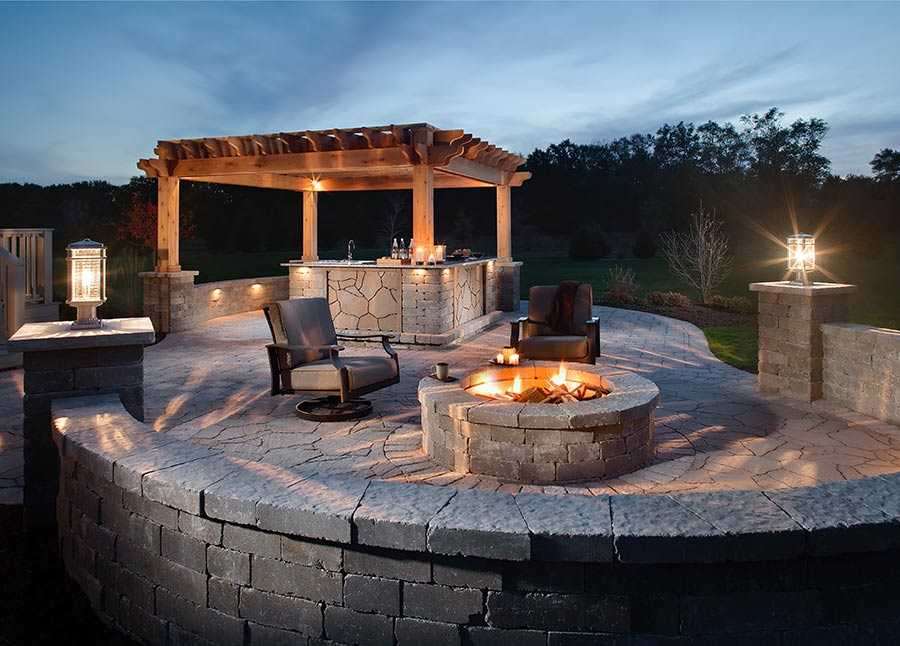
From the Westside to the Valley, Los Angeles evenings are made for being outside. A well-designed fire pit or outdoor fireplace turns your patio into a year-round gathering spot, perfect for cool coastal nights in Santa Monica, crisp canyon evenings in Studio City, or quiet backyard hangs in the South Bay.
Fire Pit vs Outdoor Fireplace: What’s the Difference?
Both fire pits and outdoor fireplaces add warmth, ambiance, and a focal point to your LA backyard, but they create very different experiences. Understanding those differences will help you choose the right feature for your home and lifestyle.
A fire pit is typically open on all sides, lower to the ground, and surrounded by seating. Because it radiates heat in every direction, it is ideal for casual group hangouts where everyone can circle the flames, toast marshmallows, or just warm up together. Fire pits can be permanent, built-in features or portable metal or concrete bowls that you can move as needed.
An outdoor fireplace, on the other hand, is a vertical, built structure with a firebox and chimney that directs smoke up and away. You generally sit in front of it instead of around it, which creates a more intimate, living-room feel outside. Outdoor fireplaces often look more architectural and permanent and can be integrated into retaining walls, covered patios, or full outdoor living rooms.
In simple terms, fire pits are social and flexible, while outdoor fireplaces are structured and sophisticated. The right choice depends on how you entertain, how much space you have, and the style of your LA-area home.
Design Ideas for LA Backyards
Because Los Angeles has so many micro-neighborhoods and architectural styles, your fire feature should respond to your specific setting. A small Silver Lake bungalow yard needs something different than a sprawling Calabasas property or a modern Venice courtyard.
For urban and compact yards in areas like Koreatown, Echo Park, or Highland Park, a low-profile gas fire pit set into a concrete or paver patio keeps the space feeling open while still delivering plenty of warmth. Bench seating along walls, built-in planters, and a simple rectangular or round pit help avoid clutter and preserve precious square footage.
On the Westside or in coastal areas like Santa Monica and Playa Vista, a linear gas fire pit with clean lines pairs well with contemporary architecture and outdoor lounges. Combine it with low, wide sofas, weatherproof cushions, and soft overhead lighting to create a relaxed, resort-like vibe that fits the beachy atmosphere.
For hillside and canyon homes in places like Sherman Oaks, Studio City, or Topanga, an outdoor fireplace can anchor a terrace cut into the slope. Built from stucco, stone, or brick to match the house, it can also act as a privacy screen from neighbors or the street. Flanking it with built-in seating or a dining area turns the space into a true outdoor room with breathtaking night views over the city.
In larger Valley or San Gabriel Valley yards, you might combine both: a main outdoor fireplace under a pergola or covered patio and a smaller, secondary fire pit near the pool or lawn. This gives you multiple zones for entertaining—intimate conversations by the fireplace and a more open, social ring around the fire pit.
Fuel Options: Wood, Gas, or Propane?
In the LA area, your choice of fuel is about more than just the vibe—it’s also about air quality, convenience, and code compliance. All three main options—wood, natural gas, and propane—can work here, but each has tradeoffs.
Wood-burning fire pits and fireplaces give you the classic campfire crackle and smell, but they also produce more smoke and sparks. In Los Angeles, there are seasonal “No Burn” days and air-quality alerts when wood burning may be restricted. Wood fires also demand more active tending, cleanup, and ash disposal.
Natural gas fire pits and fireplaces are highly popular in LA backyards because they are clean-burning, easy to turn on and off, and can be directly plumbed from your home’s gas line. Once installed, you simply flip a switch or turn a key to start the fire, which is perfect for spur-of-the-moment gatherings when the evening suddenly cools off.
Propane systems, usually connected to a tank hidden in a cabinet or nearby enclosure, provide similar convenience without the need to run a gas line. They are great for smaller spaces or situations where you might want some flexibility in placement, but you will need to monitor fuel levels and swap tanks periodically.
Many LA homeowners ultimately choose gas or propane for daily use and keep a small wood-burning bowl or chiminea for those rare nights when they want that traditional campfire experience (and when air-quality restrictions allow it).
Key Installation Tips for LA-Area Homes
Installing a fire pit or outdoor fireplace in Los Angeles isn’t just about setting a metal bowl on your patio and lighting a match. Proper planning ensures the feature is safe, functional, and compliant with local regulations and HOA rules.
Start by choosing the right location. Look for a flat, stable surface that is away from overhanging trees, wood fences, or structures with combustible siding. Most guidelines recommend keeping open flames at least several feet away from buildings, overhangs, and property lines, and local codes may be stricter, especially in high fire-risk zones.
Consider prevailing winds in your neighborhood. In coastal areas, evening breezes can blow smoke toward the house or your neighbors if the fire feature is not positioned thoughtfully. An outdoor fireplace with a chimney can help direct smoke upward and away, while a fire pit should be placed where wind patterns will not blow sparks into landscaping or seating areas.
If you plan to use natural gas, bring in a licensed plumber to run the gas line and ensure everything meets code. Similarly, if your outdoor fireplace is large or integrated into a covered structure, you will likely need permits, inspections, and possibly input from an engineer or qualified contractor.
Foundation and hardscape also matter. Permanent fire pits are often built on or into non-combustible surfaces like concrete, stone pavers, or tile. This makes cleanup easier and reduces the chance of embers igniting mulch or dry grass. For outdoor fireplaces, proper footings and masonry work are essential so the structure doesn’t crack, lean, or settle over time.
Safety Rules Every LA Homeowner Should Follow
Because Southern California is prone to wildfires, safety is not optional—it is central to any backyard fire project. Even a small gas fire pit needs to be treated with respect and used responsibly.
Always keep a safe clearance around your fire feature. That means no low-hanging branches above, no nearby outdoor curtains or cushions that could blow into the flames, and a clear zone around the pit or fireplace opening where people can move without tripping. Use non-combustible materials—stone, metal, tile—directly around the fire area.
Keep basic firefighting tools close by. A hose with a spray nozzle, a bucket of sand, or a fire extinguisher rated for outdoor use can make the difference if a stray ember lands in dry landscaping. Gas systems should have clearly marked shutoff valves that are easy to reach.
Never leave a fire unattended, especially if kids or pets are around. Establish rules for your household and guests: no running near the fire, no throwing trash or plastics into the flames, and no sitting on the edge of a raised fire feature where clothing could catch.
Finally, stay aware of local regulations and temporary restrictions. In some hillside neighborhoods or Very High Fire Hazard Severity Zones, open flames may be heavily regulated or prohibited. Check with your city, county, or fire department before building or lighting up a new feature so you don’t run into fines or safety issues.
Which Is Right for Your LA Backyard?
If you love hosting larger groups, want flexible seating, and prefer a relaxed, casual vibe, a fire pit is often the best fit. You can gather a crowd around it, play music, and let people move in and out of the circle as the night goes on. For many LA homeowners, a sleek, gas-powered built-in pit delivers all the ambiance with minimal maintenance.
If you dream of an outdoor living room—think cozy seating, maybe a mounted TV above the mantel, and a strong visual statement—an outdoor fireplace may suit you better. It acts like a piece of architecture in your yard, adds privacy and a sense of enclosure, and can significantly boost perceived value when integrated into a full outdoor kitchen or patio.
Some properties benefit from both: a main outdoor fireplace as the anchor and a smaller fire pit for overflow seating or a secondary zone. In larger Los Angeles backyards, this layering can turn your property into a series of inviting spaces instead of one big empty patio.
Ultimately, the right choice depends on your lot size, budget, and how you spend your evenings. The good news is that in LA’s mild climate, a well-designed fire pit or outdoor fireplace will get used far more often than in colder parts of the country—making it one of the most rewarding upgrades you can add outdoors.
Bringing Your Fire Feature to Life
Whether you go with a fire pit, an outdoor fireplace, or both, partnering with an experienced LA-area contractor can help you avoid costly mistakes and get all the details right. They can guide you through design, gas and electrical planning, permitting, and material selections that stand up to Southern California’s climate.
Think about how your new fire feature will connect to the rest of your yard: lighting, seating, landscaping, and circulation all matter. When everything works together, your backyard stops being a dark, unused space at night and becomes one of the most inviting “rooms” in your home—perfect for those long, cozy Los Angeles evenings.