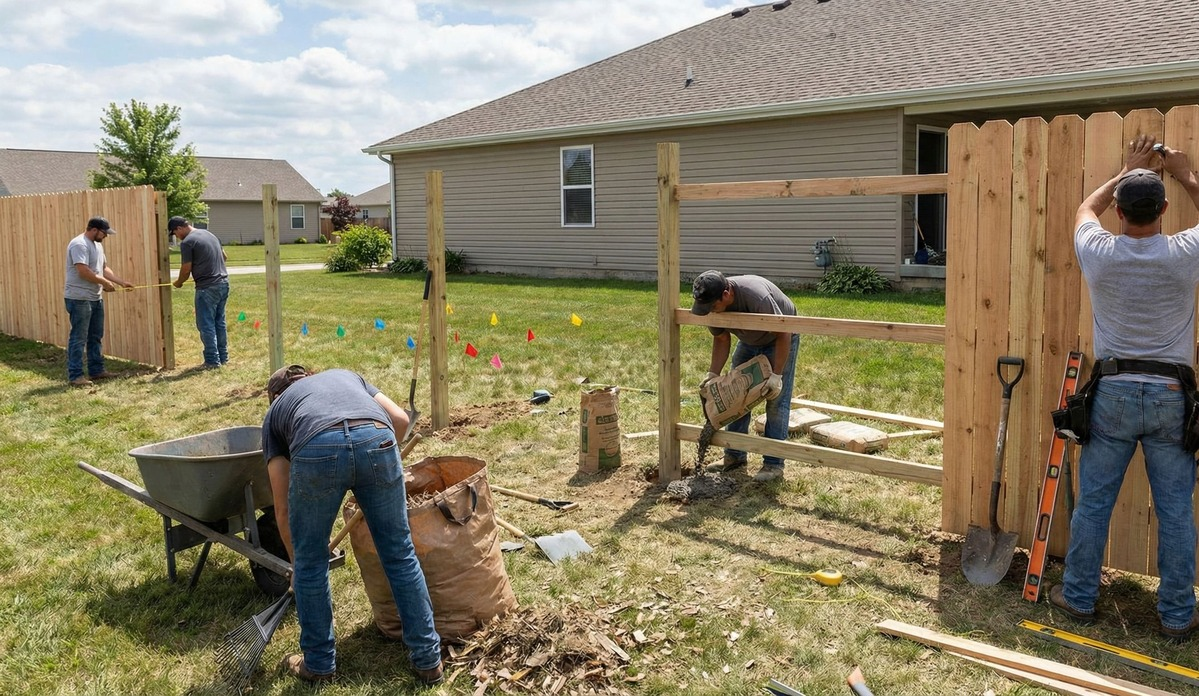
There is a specific feeling of relief when you close a gate behind you. It’s that moment when the outside world stays out, and your private space is truly yours. Over the years leading GAGA US Construction, I’ve realized that a fence is rarely just about marking a property line. It is about safety for your kids, a barrier for the dog, and a design choice that frames your home.
If you are reading this, you are likely looking for fence installation that lasts longer than a couple of seasons. You might be tired of nosy neighbors, or maybe an old storm knocked down your existing panels. Whatever the reason, you need facts, not sales fluff. You need to know what goes into a solid build, what it really costs, and why calling a pro is usually cheaper in the long run than trying to fix a botched weekend project.
Let’s walk through everything you need to know about getting a fence installed in 2025.
The Shift Away from DIY: Why Homeowners Are Calling Pros
A few years ago, we saw a massive spike in people trying to build their own fences. The idea makes sense on paper: buy some lumber, rent a post-hole digger, and save on labor. But recently, we have seen a sharp decline in DIY fencing projects. Why? Because the reality of the job is brutal.
Digging through root systems or hitting hidden rocks isn’t shown in the fast-forwarded tutorial videos. I have visited countless properties where a homeowner spent three weekends digging, only to realize their posts weren't level or they didn't account for the slope of the yard (we call this "racking" the fence). When the ground shifts—and it always does—a fence without deep, properly set concrete footings will start to lean.
We are seeing more homeowners who value their time and back health over saving a few dollars upfront. They want a guarantee that when the wind blows, the fence stays put.
Choosing Your Material: Wood, Vinyl, or Metal?
The most common question I get is, "Arsen, what material should I use?" The answer depends on your budget, your taste, and how much maintenance you are willing to do. Here is the honest breakdown of the big three.
Wood Fencing: The Classic Choice
Wood is still the king of aesthetics for many people. It feels natural and smells great. A cedar or redwood fence offers that classic, warm look that boosts curb appeal instantly. It is also the most customizable; we can cut it to any height or style you want.
However, wood is organic. It wants to decompose. If you choose wood, you are signing up for maintenance. You will need to stain or seal it every few years to prevent rot and warping. If you are okay with that, nothing beats the look.
Vinyl Fencing: The "Set It and Forget It" Option
If you never want to pick up a paintbrush again, vinyl is your best friend. Modern vinyl has come a long way from the shiny, plastic-looking panels of the past. It now comes in textures that mimic wood grain and various matte colors.
It is incredibly durable. It won’t rot, termites can’t eat it, and it doesn’t splinter. The downside? It can be pricier upfront compared to pressure-treated pine, and if a section breaks (like from a falling tree branch), you usually have to replace the whole panel rather than just one board.
Metal and Wrought Iron: Security and Elegance
If your goal is security without blocking the view, metal is the way to go. We often use aluminum or steel for these projects. Aluminum is fantastic because it doesn't rust, making it ideal if you live near the coast or in humid areas. Steel is stronger but requires powder coating to prevent rust.
These fences are great for keeping dogs in while letting you see the street or the landscape behind your house. They don't offer privacy, but they are tough as nails.
Understanding Fence Installation Cost
I believe in transparency. When you search for "fence installation cost," you see a wide range of numbers. That is because every yard is different. Here is what actually drives the price up or down on your quote.
- Linear Footage Obviously, a bigger yard needs more material.
- Materials Pressure-treated pine is the most affordable wood. Exotic hardwoods, high-grade vinyl, and ornamental iron cost significantly more.
- Terrain If your yard is flat, the installation is straightforward. If you live on a hill, we have to step or rack the fence, which requires more labor and customized cuts.
- Demolition Do you have an old fence that needs to be torn down and hauled away? That takes time and dump fees.
- Gates A standard gate is one thing; a double-drive gate with electronic access hardware is another.
In 2025, material prices have stabilized somewhat compared to previous years, but labor for skilled craftsmanship is at a premium. You are paying for the expertise to ensure those posts are set below the frost line (if applicable) and that the fence is perfectly plumb.
The Installation Process: What to Expect
When you hire a professional team, the process should be smooth. Here is how we handle it at GAGA US Construction.
Step 1: Consultation and Measurement
We walk the property with you. We identify property lines—this is critical. You do not want to build a beautiful fence only to find out it is six inches on your neighbor's land and has to be torn down. We discuss styles, height restrictions, and HOA rules.
Step 2: Utility Marking
Before a shovel hits the dirt, we contact utility companies to mark gas, water, and electric lines. Hitting a line is dangerous and expensive. A pro never skips this step.
Step 3: Setting the Posts
This is the backbone of the project. We dig holes to the appropriate depth based on the fence height and soil type. We set the posts in concrete and let them cure. If the posts aren't right, the fence fails. Period.
Step 4: Installing Rails and Pickets
Once the concrete is set, we attach the horizontal rails and then the vertical pickets (for wood/vinyl). We ensure consistent spacing so the fence looks uniform.
Step 5: The Cleanup
We don't leave a mess. We haul away the dirt from the post holes, pick up every screw and nail, and leave your yard looking cleaner than we found it.
Finding Reliable "Fence Contractors Near Me"
If you are searching for "fence contractors near me," be careful. The barrier to entry in this industry is low. Anyone with a truck and a hammer can claim to be a fence builder. Here is how to vet them.
First, ask for proof of insurance. If a worker gets hurt on your property and the contractor isn't insured, that liability could fall on you. Second, ask about their warranty. A reputable company stands behind their workmanship. If a gate starts sagging three months later, will they come back to fix it?
Finally, look for local experience. A local contractor knows the local soil conditions—whether it is rocky, sandy, or clay-heavy—and how that affects installation. They also know the local zoning laws regarding fence height and setbacks.
Zoning and Permits: The Boring but Essential Stuff
I can’t stress this enough: do not ignore permits. Most cities have strict rules about how high a fence can be, especially in the front yard (usually much lower than the backyard) and on corner lots where visibility for traffic is a concern.
At GAGA US Construction, we handle the permitting process for our clients. We know the codes, so you don’t have to spend your day at City Hall. Building an unpermitted fence is a recipe for a fine and a forced removal order.
The Value of Privacy and Curb Appeal
A new fence is one of the few home improvements that offers immediate gratification. The day we finish, your home looks different. It feels safer. It looks finished. Real estate agents often tell us that a well-maintained fence is a strong selling point because it frames the yard and suggests the home has been cared for.
Whether you want a 6-foot privacy fence to create a backyard oasis or a picket fence to define your garden, the investment pays off in quality of life every single day.
Ready to Transform Your Property?
Your home deserves a boundary that is as strong as it is beautiful. Don't settle for wobbly posts or uneven pickets. You need a team that treats your property with respect and delivers a product that stands the test of time.