Home » Demolition 101 for Home Projects in 2026
Get Your Free Estimate
Fill out the form below. We reply within 24 hours.
ON THIS PAGE
- Demolition
Demolition 101 for Home Projects in 2026
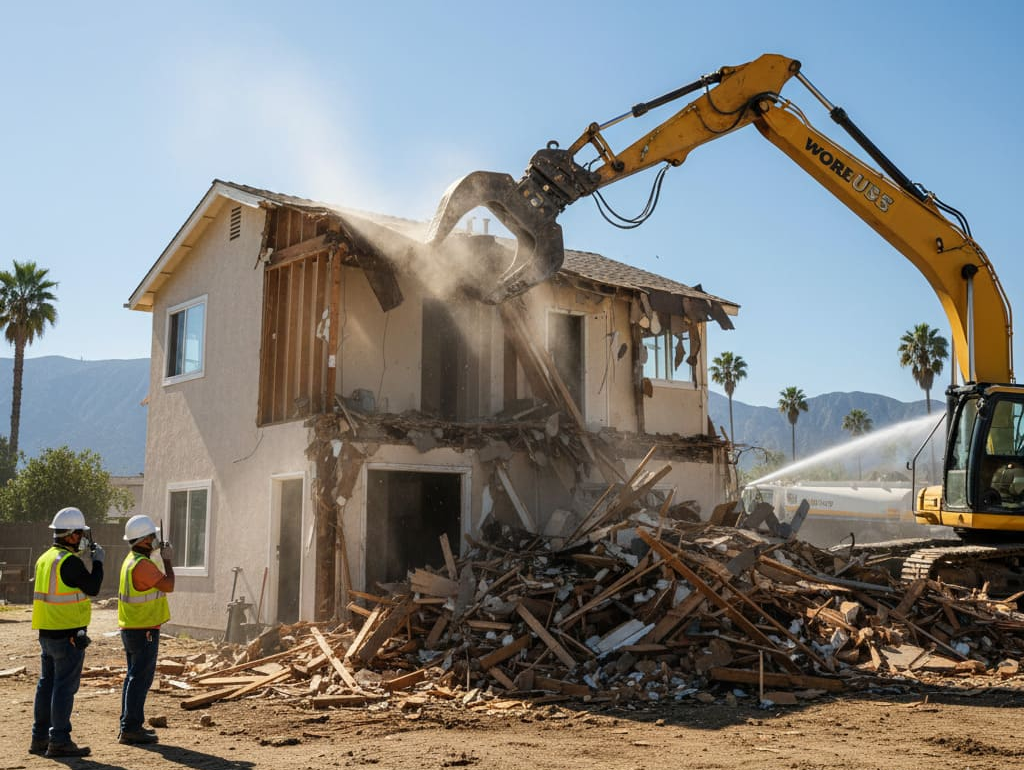
On home renovation shows, “Demo Day” is the big, exciting TV event. It’s all about swinging sledgehammers, kicking through drywall, and making a huge, cinematic mess. It looks like fun, cathartic chaos.
As a General Contractor managing high-end remodels across the South Bay, I can tell you: that is not demolition. That is wrecking.
Professional demolition—the kind we practice at GAGA US Construction—is a careful, strategic, and often delicate process. We prefer to call it “Deconstruction.”
Whether we are gutting a vintage bungalow in Redondo Beach or preparing a Manhattan Beach home for an open-concept layout, the goal isn’t just to destroy the old; it’s to prepare a clean, safe, and structurally sound “canvas” for the new work.
Phase 1: The “Paperwork” (Safety & Regulation)
In California, and specifically in the strict municipalities of the South Bay, you cannot just start tearing walls down. A professional spends more time on prep than on the physical demo. Rushing this is the #1 mistake homeowners make.
1. Hazardous Materials (The AQMD Factor)
This is non-negotiable. If your South Bay home was built before 1980 (which accounts for most of Torrance, Hawthorne, and Palos Verdes), you must assume it contains hazardous materials.
- Asbestos: Found in popcorn ceilings, 9×9 vinyl floor tiles, old HVAC duct tape, stucco, and drywall joint compounds.
- Lead Paint: Common in almost all homes built before 1978.
- The Local Rule: In our region, we are governed by the South Coast Air Quality Management District (SCAQMD). Under Rule 1403, before any demolition begins, you are often required to have an asbestos survey performed by a certified consultant.
2. Utility “Lock Out”
This isn’t just “be careful.” This is “shut it off at the source.”
- Water: We shut off the main water valve to the house. In beach cities, old valves often fail, so we verify they are holding before we cut any pipes.
- Electricity: We kill the breakers for the entire work zone. Pro Tip: We use a non-contact voltage tester to triple-check every outlet.
- Gas: If we are removing a gas stove or water heater, the gas line must be capped by a professional plumber.
3. Neighborhood Relations (The “Walk Street” Rule)
In Hermosa and Manhattan Beach, homes are often inches apart. Your demolition is your neighbor’s demolition.
- Dust Control: We don’t just close the door. We set up HEPA air scrubbers (negative air machines) to filter the air and prevent dust from escaping the containment zone.
- Noise: We adhere strictly to city construction hours (usually 7:30 AM – 6:00 PM in most South Bay cities) to maintain your good standing with the HOA and neighbors.
Phase 2: Containment & Protection
Construction dust is fine, gritty, and insidious. Without proper containment, silica dust will travel through your HVAC system and coat your toothbrush in the master bathroom upstairs.
The GAGA Containment Standard:
- Plastic Walls: We use ZipWall systems to create airtight seals between the demo zone and the rest of your living space.
- Floor Protection: We don’t just use drop cloths (which slip). We use Ram Board or Masonite taped down to protect the hardwood floors or tile in the pathways we use to haul debris.
- HVAC Seal: We seal every return and supply vent in the demo zone. If you don’t do this, your furnace will suck up drywall dust and blow it into every other room in the house.
Phase 3: The Deconstruction Process
Pros work with a plan, not a sledgehammer. We deconstruct in a specific order to maximize safety and recycling.
Step 1: CalGreen & Salvage (The Recycling Mandate)
In California, we have CalGreen building codes. This requires that we divert a certain percentage (usually 65%) of construction waste away from landfills.
- We Don’t Just Smash: We carefully remove reusable items like cabinets, doors, and fixtures.
- Donation: We often work with local organizations like the Habitat for Humanity ReStore in Torrance. Donating your old kitchen cabinets isn’t just good for the planet; it provides you with a tax deduction receipt.
Step 2: Top to Bottom
Gravity is our friend, but it can also be an enemy. We work down:
- Fixtures: Light fixtures, ceiling fans, and blinds come down first.
- Trim: We pry off baseboards and crown molding.
- Drywall: This is the messy part. We score it with utility knives and remove it in large chunks rather than smashing it into confetti.
- Framing: Only after all utilities are confirmed dead, we remove the studs.
Step 3: The Cardinal Sin (Load-Bearing Walls)
This is the mistake that can bring your house down. Literally. With the popularity of “Open Concept” living in the South Bay, everyone wants to knock down the wall between the kitchen and the living room.
- What is a Load-Bearing Wall? It supports the weight of the roof or the second story. In the South Bay, these walls also play a critical role in seismic shear strength (earthquake resistance).
- The GAGA Rule: We never remove a wall without a plan from a Structural Engineer. If it is load-bearing, we must build temporary support walls (“shoring”) and install a structural beam to carry the weight.
Phase 4: Logistics (The Dumpster Problem)
In suburban America, you just drop a massive dumpster in the driveway. In the South Bay? It’s complicated.
- Encroachment Permits: If you live in a beach city with a small driveway (or no driveway), the dumpster has to go on the street. You need an Encroachment Permit from the city, payment for parking meter bagging, and safety cones.
- The “Haul & Go” Option: For tight “Walk Streets” or tricky hillside driveways in PV, we often use “Low Boy” dump trucks. We load the debris by hand immediately and the truck leaves the same day. It’s cleaner and keeps the neighbors happier.
Conclusion: The “Clean Slate” Promise
Successful demolition is not about speed or strength; it’s about safety and precision. It is the careful un-building of a space to prepare it for the beautiful new design to come.
A clean, safe, and well-planned deconstruction sets the stage for the entire remodel to run smoothly. It saves you from the costly “surprises” that come from just “smashing stuff.”
Frequently Asked Questions
Let's Build Something Lasting
Stop searching and start building. If you are ready to secure your home and boost your curb appeal, let’s talk. We are currently booking for the 2026 season.