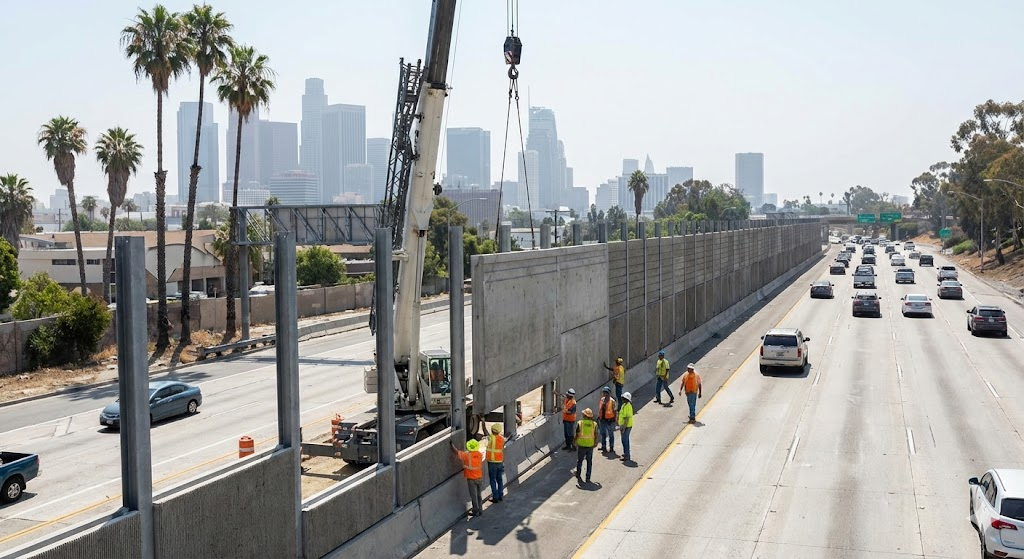
In the sprawling, sun-drenched expanse of Los Angeles, our homes are our castles. But for many Angelenos, the castle walls are under siege—not by medieval armies, but by the relentless, low-frequency hum of the 405, the distant roar of LAX flight paths, and the increasing density of our neighborhoods. The seamless indoor-outdoor lifestyle that draws the world to Southern California is often compromised by one invisible pollutant: Noise.
At GAGA US Construction, we believe your backyard should be a sanctuary, not a sidewalk extension. While many homeowners look for quick fixes like wooden slats or tall hedges, true auditory relief requires a more structural approach. Enter Soundscaping with Concrete.
As a licensed General Contractor serving the Greater Los Angeles area, we don’t just "install fences." We manage the engineering and construction of comprehensive outdoor environments. This guide delves into the science of silence, the complexities of LA zoning laws, and how a General Contractor manages the heavy lifting required to turn your noisy property into a private oasis.
The Physics of Silence: Why Concrete Wins
To understand why your current wood or vinyl fence isn’t blocking the street noise, you have to understand the physics of sound. Noise travels in waves, and to stop a wave, you need mass.
This is governed by the "Mass Law" of acoustics, which states that the heavier and denser a barrier is, the harder it is for sound waves to vibrate through it. A standard cedar fence weighs roughly 2 to 4 pounds per square foot. In contrast, a precast concrete or masonry wall weighs between 35 and 55 pounds per square foot.
The Problem with Wood and Vinyl
Wood fences are popular for their rustic look, but they are acoustically porous. Over time, the California sun warps wood, creating tiny gaps between planks. In the world of acoustics, a gap of just 1% in a barrier can reduce its sound-blocking efficiency by 50%. Sound behaves like water; if there is a hole, it will flow through. Vinyl, while gap-free, lacks the mass to stop low-frequency energy, such as the rumble of a truck engine or a bus.
The Concrete Advantage: STC Ratings
We measure sound blocking using the Sound Transmission Class (STC).
Sound Transmission Class (STC) Comparison
A properly engineered concrete wall doesn't just muffle sound; it physically reflects the energy back toward the source. For homeowners near major arteries like Sepulveda, Ventura Boulevard, or the freeways, concrete is the only material that effectively mitigates the deep rumble of traffic.
Navigating the Bureaucracy: The General Contractor’s Role
If building a concrete wall were as simple as stacking blocks, everyone would do it. However, in Los Angeles, building a heavy structural wall involves a complex web of zoning codes, safety regulations, and engineering requirements. This is where hiring a licensed General Contractor (Class B) becomes vital.
- 1. The 3.5-Foot Trigger Here is the most critical rule in Los Angeles fencing: Masonry or concrete fences exceeding 3.5 feet (42 inches) in height require a building permit. Because concrete is heavy, it poses a seismic risk. The Los Angeles Department of Building and Safety (LADBS) requires engineering calculations. As your General Contractor, GAGA US Construction manages the entire permitting and engineering process, ensuring your project is safe, legal, and compliant.
- 2. The Front Yard Limitation Many homeowners dream of a 6-foot wall right on the sidewalk to block street noise. However, LAMC Section 12.22 generally limits front yard fences to 42 inches. To build higher, you generally need a variance. We help clients navigate these feasibility studies to see what is possible for their specific lot.
- 3. Hillside Ordinances If you live in the Hollywood Hills, Silver Lake, or Porter Ranch, you are likely subject to the Hillside Ordinance. Building a concrete wall on a slope is a major engineering feat requiring stepped footings and deep caissons. A standard fence installer may not have the license or insurance to manage structural hillside grading, but a General Contractor does.
Material Science: The Aesthetic Evolution of Concrete
Gone are the days when "concrete fence" meant a prison-style cinder block wall. Modern precast technology and architectural masonry allow us to construct walls that are indistinguishable from stone or wood but possess the durability of rock.
Precast Concrete Systems
We utilize precast panels that are cured in a factory to achieve strength ratings of 5,000+ PSI. We oversee the installation of these post-and-panel systems that are seismic-resistant and visually stunning.
- Woodcrete: Imagine the grain and texture of a rustic wood fence, but it’s fireproof, termite-proof, and blocks sound. It creates the warm aesthetic of a Craftsman bungalow without the rot.
- Chisel Stone & Stacked Stone: These textures mimic hand-laid masonry at a fraction of the installation time. They are perfect for Mediterranean or Spanish Colonial Revival homes common in LA.
Fire Resistance in the WUI
For clients in Wildland-Urban Interface (WUI) zones (like Bel Air or the Valley edges), wood fencing acts as a wick for wildfires. Concrete is non-combustible. A concrete perimeter wall acts as a heat shield, potentially saving your home from ground-level flames and radiant heat.
Soundscaping: The "Soft" Science of Silence
A concrete wall is the "hard" skeleton of your defense, but to create a true sanctuary, you need "soft" tissues. At GAGA US Construction, we manage your backyard as a holistic design-build project. We don't just put up a wall; we create a Soundscape.
1. Absorption with Vegetation
To stop echoes, we recommend integrating "Green Walls."
- Vines: Creeping Fig (Ficus pumila) or Boston Ivy attaches directly to the concrete, creating a lush, fuzzy layer that absorbs high-frequency noise.
- Hedges: Planting dense columns of Ficus Nitida or Podocarpus in front of the wall creates a secondary barrier. The leaves diffract (scatter) sound waves, while the concrete blocks the heavy energy.
2. Psychoacoustics: The Water Feature
Sometimes, you cannot block 100% of the noise. This is where "masking" comes in. By installing a water feature—like a recirculating fountain—we introduce pleasant "white noise." As General Contractors, we coordinate the plumbing and electrical trenching required to integrate these features seamlessly into your hardscape.
The Engineering Reality: Foundations and Seismic Safety
Living in Seismic Design Categories D, E, or F (which is most of LA) means your wall needs a serious foundation.
Caissons vs. Trench Footings
For heavy precast or masonry walls, we typically manage the drilling of caissons—deep, circular concrete piers—rather than shallow trench footings.
- Why Caissons? They anchor the fence posts deep into the bedrock or stable soil, providing ductility during an earthquake. This prevents the wall from tipping over during ground liquefaction or heavy shaking.
General Contractor Scope: Drilling caissons requires heavy machinery and precise rebar cage fabrication. This is "Grade A" construction management that ensures your investment lasts for decades.
ROI: Is a Concrete Sound Wall Worth It?
A custom concrete sound barrier is a significant investment. Is it worth it?
- Real Estate Value: In the Los Angeles market, a "quiet, private backyard" is a premium asset. Homes backing up to busy streets often trade at a discount. By effectively mitigating that noise, you recover usable square footage. You transform a noise-polluted liability into a private courtyard.
- Longevity: A wood fence needs staining every 3 years and replacement every 15. A concrete fence, sealed against graffiti and UV, is a lifetime asset. It does not rot, warp, or succumb to termites.
Why Choose a General Contractor?
You might wonder, "Why not just hire a fence installer?" In Los Angeles, a concrete wall project is rarely just a wall. It involves:
- Demolition: Removing old footings and hauling away debris.
- Grading: leveling the ground or managing slopes.
- Plumbing/Electrical: Running lines for landscape lighting or fountains before the concrete is poured.
- Permitting: Navigating LADBS plan checks.
- Hardscaping: Integrating the wall with new pavers, patios, or pools.
A specialized installer usually only does the installation. If they hit a gas line, need to regrade a slope, or require a variance, the project stops. GAGA US Construction holds a General Contractor License. This means we manage the entire ecosystem of your backyard renovation. We see the big picture. We coordinate the demolition, the structural engineering, the utility trenching, and the final aesthetic touches.
Our Management Process
- Consultation & Acoustic Assessment: We evaluate your noise sources and privacy needs.
- Design & Engineering: We facilitate the selection of materials (Precast, CMU, Stucco) and manage structural calculations for seismic compliance.
- Permitting: We interface with the City of Los Angeles so you don't have to.
- Execution: From overseeing caisson drilling to managing the final installation, we ensure the build meets strict professional standards.
- The Finish: We coordinate lighting, gates, and site preparation for your "soundscaping" plants.
Conclusion: Reclaim Your Peace
Los Angeles is a vibrant, loud, energetic city. We love it here. But when you close your gate, the city should stay outside. Soundscaping with concrete is the most effective way to decouple your living experience from the urban clamor. It provides safety, increases property value, and, most importantly, grants you the luxury of silence.
Ready to silence the street and upgrade your lifestyle?
Transform Your Outdoor Living Space Today
Don’t settle for a fragmented approach. Partner with GAGA US Construction to manage your comprehensive backyard project. As your General Contractor, we oversee every detail—from structural engineering and permitting to the final hardscape execution—ensuring your sanctuary is built to code and built to last.
Let’s build something quiet, durable, and beautiful together.
Disclaimer: Zoning laws and building codes in Los Angeles are subject to change. Always consult with a licensed professional regarding the specific regulations for your property address.