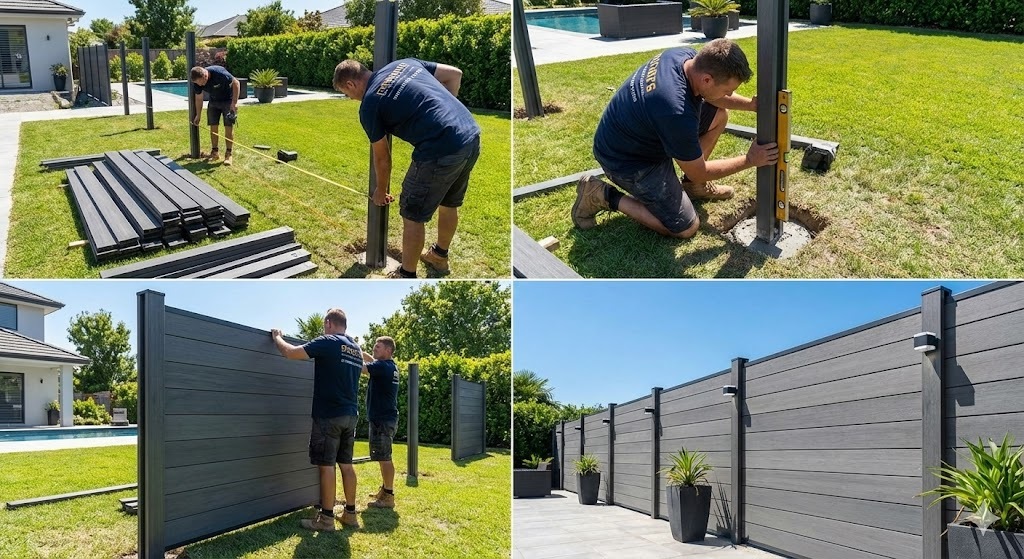
Living in Los Angeles comes with a specific set of challenges for any homeowner. We deal with blistering heat in the Valley, corrosive salt air in Santa Monica, and the ever-present threat of wildfires in the hills. At GAGA US Construction, we have stopped viewing fences as simple property markers. In this city, a fence is a defense system.
If you are reading this, you are likely done with wood. You are tired of the dry rot, the termite damage, and the constant need to pressure wash your property line just to keep it looking decent. You are looking for a solution that handles the LA climate without needing a weekend of labor every six months. That solution is composite fencing.
Here is the reality of installing high-performance composite fencing in Los Angeles in 2025—minus the sales fluff.
Why Wood is Failing in Los Angeles
Traditional lumber used to be the default, but the local environment has become too harsh for organic materials to last. We see two main issues destroying wood fences across the county:
First, the Marine Layer and Sun Cycle. The combination of morning moisture and intense afternoon UV radiation destroys wood fibers. The sun breaks down the lignin (the glue holding the wood together), causing it to turn gray and splinter. Second, Termites. Subterranean and drywood termites are endemic here. They view your cedar fence as a buffet.
Composite fencing is engineered from a blend of recycled wood fibers and high-density plastics. It offers zero nutritional value to termites and is capped with a UV-resistant shell that locks in color for 25 to 50 years. It’s not just a fence; it’s a permanent asset.
The Water Bill Reality
We all know the pressure to conserve water. While most people focus on ripping out lawns, they forget the "hidden" water cost of wood fences. To keep a wood fence from rotting, it needs to be power washed and stained every two years. A thorough cleaning of a standard perimeter fence can waste hundreds of gallons of water per session.
Composite fencing changes the math. Because the material is non-porous and immune to mildew, you never need to power wash it. A quick rinse with a garden hose (or even captured rainwater) is all it takes to remove dust. Over the lifespan of the fence, you are saving thousands of gallons of water—a critical contribution to our local conservation efforts.
Navigating LA Codes: HPOZ and WUI Zones
Los Angeles has some of the most complex building codes in the country. Installing a fence here isn't just about digging holes; it's about compliance. Here is what you need to know about where you live:
- The "Front Yard" Trap (42-Inch Rule) In most residential zones, you cannot build higher than 42 inches in the front yard. We see homeowners get cited constantly for planting tall hedges or building 6-foot fences right up to the sidewalk. We know how to design "stepped" fences that give you curb appeal while keeping the city inspectors happy.
- Historic Zones (HPOZ) If you live in Hancock Park or Angelino Heights, the preservation board will likely ban shiny white vinyl. However, they are increasingly approving premium matte composite that mimics the grain and dimension of real wood. We know which specific product lines get approved.
- Wildfire Zones (WUI) If you are in the hills or canyons, you are likely in a Very High Fire Hazard Severity Zone. The code is shifting to prevent "fuel bridges"—fences that carry fire from the brush to your house. We specialize in Class A fire-rated composites and non-combustible metal framing that satisfy insurance requirements and protect your home.
The Financial Breakdown: Cost vs. Value
Let’s be direct about the money. Composite fencing costs more upfront than wood. Usually, you are looking at double the material cost. However, a wood fence is a liability; it costs money every year to maintain and will likely need replacement in 12–15 years.
Composite is an investment. When you factor in the cost of staining, repairs, water, and the eventual replacement of a rotted wood fence, composite breaks even around year 10. After that, it is pure savings. Plus, in the competitive LA real estate market, a "low-maintenance, fire-hardened" yard adds tangible value to your appraisal.
Our Installation Protocol
Because composite materials are heavier and more flexible than wood, they cannot be installed by a general handyman. They require specific engineering to handle the thermal expansion caused by LA temperature swings. Here is how GAGA US Construction handles the build.
Designing for the LA Aesthetic
Gone are the days of plastic-looking fences. We are currently installing systems that perfectly match the architectural styles of our city.
The Mid-Century Modern Look
For Eichler homes and modern renovations, we use horizontal composite boards with dark aluminum framing. This emphasizes clean lines and creates a sleek, high-end look that standard dog-eared wood fences can't match.
The Modern Farmhouse
For the new builds in Studio City and Encino, we use matte white composite or board-on-board styles. It gives that crisp, clean "farmhouse" look but without the peeling paint that plagues traditional white picket fences.
Ready to Fortify Your Property?
A fence in Los Angeles needs to do more than look good. It needs to withstand salt, sun, wind, and fire. It needs to provide privacy in a dense city and security for your family. Don't settle for a temporary wood fix.
If you are ready for a perimeter solution that is built to the GAGA standard—durable, compliant, and architecturally stunning—let’s talk.