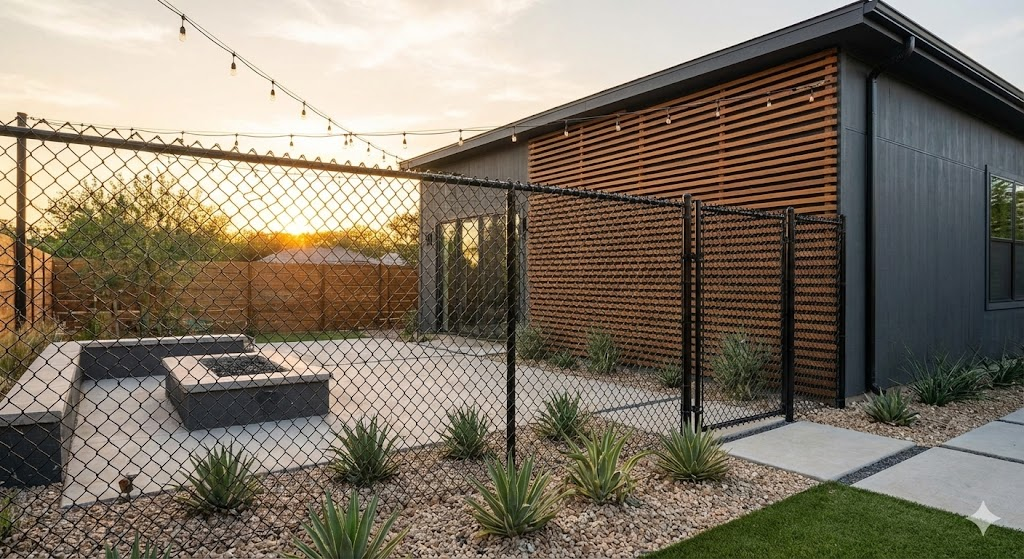
In the sprawling, sun-drenched landscape of Los Angeles, the boundary between your home and the street is more than just a property line—it is a design statement. For decades, the conversation around residential fencing in LA has been dominated by two extremes: the high cost of wrought iron and the utilitarian eyesore of galvanized "grey" chain link.
But in 2025, a shift in architectural trends has crowned a new king in the market: Black Vinyl-Coated Chain Link, often referred to by landscape architects as the "invisible boundary."
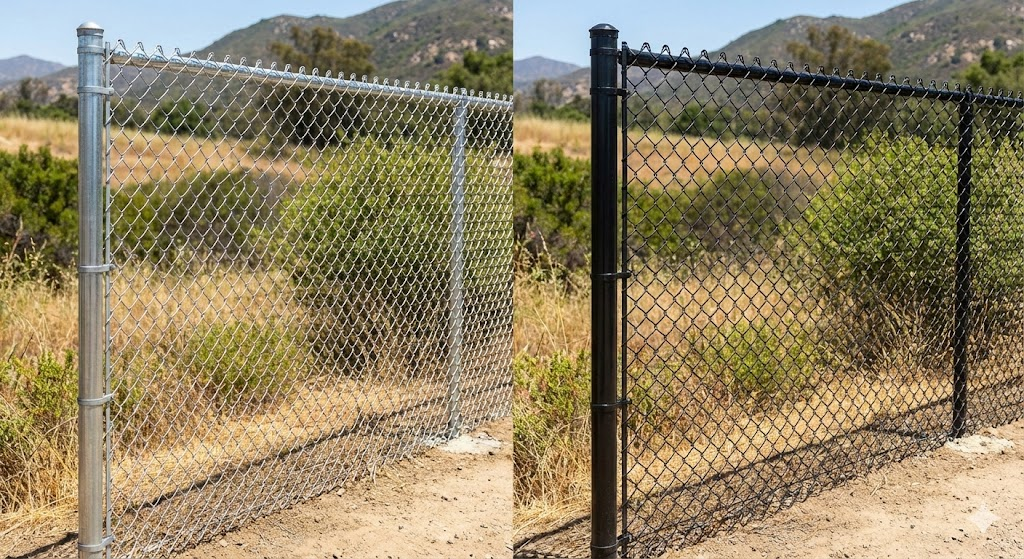
At GAGA US Construction, based right here in Glendale, we have seen this demand skyrocket. Homeowners from the Hollywood Hills to the San Fernando Valley are discovering that black chain link is not merely a budget compromise—it is a sophisticated "Modern Minimalist" design choice that rivals the aesthetics of cable railing for a fraction of the price.
This article is your definitive guide to understanding why black chain link is the smartest investment for your LA property, covering everything from the physics of visibility to the specific zoning codes of the Los Angeles Municipal Code (LAMC).
1. The Optical Illusion: Why Black Disappears
The primary objection we hear from clients regarding chain link is, "I don't want my yard to look like a prison yard." This valid concern stems from the ubiquity of galvanized fencing.
Standard silver chain link is coated in zinc. Zinc is highly reflective. When the bright Southern California sun hits a silver fence, it acts like a mirror, reflecting light back at your eye. This high-contrast reflection forces your brain to register the fence as a solid, intrusive barrier, effectively shrinking your visual horizon and blocking that view of the canyon or the city skyline you paid a premium for.
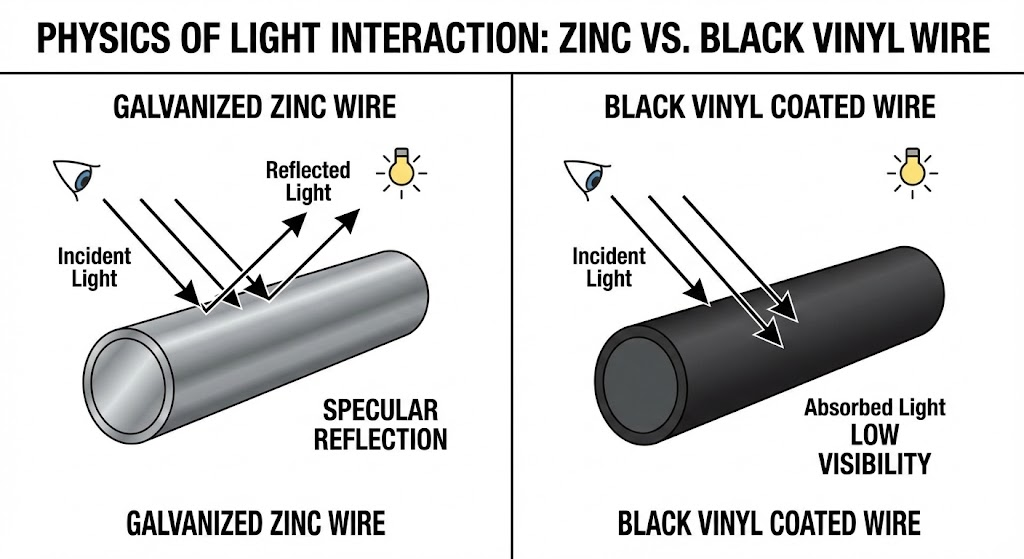
The Black Vinyl Advantage
Black, by definition, absorbs light. When we install a black vinyl-coated fence, the mesh absorbs the harsh sunlight rather than reflecting it. If you look past the fence—at a dark tree trunk, a shadowed lawn, or the street—the black mesh has a lower tonal contrast against the background.
The result is a phenomenon called visual recession. The fence seems to disappear, allowing your eye to focus on the landscape beyond the boundary rather than the boundary itself. For Los Angeles homeowners with pools, gardens, or views, this "see-through" capability offers the safety of a steel barrier without the visual confinement of a solid wall.
2. Material Science: Not All Black Fences Are Created Equal
As a licensed General Building Contractor (License #1074874), GAGA US Construction prioritizes longevity. A common pitfall for LA homeowners is buying "big box store" black fencing that peels and rusts within three years. To ensure your fence lasts 15-25 years in the coastal air, you must understand two critical specifications: Coating Class and Wire Gauge.
The Coating Hierarchy: Class 2b vs. Class 1
Vinyl coating isn't just paint; it is a protective polymer layer applied over the galvanized steel core. ASTM F668 standards define the quality, and the difference is massive:
- Class 1 (Extruded) This is the "sock" method. The vinyl is pulled over the wire like a sleeve. It is not glued to the steel. In our hot LA summers, the metal expands and contracts, but the vinyl doesn't move with it. This creates gaps where salty moisture gets trapped, rotting the wire from the inside out.
- Class 2b (Fused and Adhered) This is the GAGA US standard. A thermoset bonding agent glues the vinyl to the steel core at a molecular level. The steel and plastic become one composite unit. It resists cracking, peeling, and moisture intrusion.
The Gauge Game: Core vs. Finish
Be careful when comparing quotes. A contractor might offer you "9-gauge" wire, which sounds strong. But is that the core or the finish?
- The Trap An 11-gauge steel wire (thinner/weaker) dipped in thick plastic until it measures 9-gauge.
- The Solution We recommend 9-Gauge Core wire. This means the steel itself is heavy-duty 9-gauge, providing the tensile strength needed to stop a large dog or resist an impact, with the vinyl added on top.
3. Navigating Los Angeles Zoning: The 42-Inch Rule
Installing a fence in Los Angeles is a legal process as much as a construction one. The City of Los Angeles has strict zoning ordinances designed to maintain the "open character" of neighborhoods.
The Front Yard Restriction
In most residential zones (like R1), the city considers your front yard a "semi-public" space.
- Height Limit You generally cannot build a fence taller than 3.5 feet (42 inches) in the required front yard setback (typically the first 15-20 feet of your property).
- Transparency While some cities ban chain link in front yards (like West Covina), Los Angeles generally permits it, provided it meets height limits. However, HPOZ (Historic Preservation Overlay Zones) may have stricter rules.
Side and Rear Yards
Once you move past the front setback, you can typically go up to 6 feet high without a special permit. If you have a corner lot or are on a hillside, additional visibility triangles for traffic safety apply.
Hillside Areas: If you live in the hills (e.g., Silver Lake, Mount Washington), the Baseline Hillside Ordinance may require wildlife-permeable fencing or specific grading permits if we are installing near slopes.
4. Design Trends 2025: The "California Ranch" Hybrid
Black chain link is versatile. While it looks great on its own, we often install it in a "hybrid" configuration to elevate the aesthetic.
The Wood Top-Rail
Instead of a black metal rail across the top, we install a Redwood or Cedar cap rail. The wood adds warmth and texture, tying the fence into your home's eaves, decks, or pergola. The black mesh below disappears, leaving the floating wood line to define the space. This gives you the high-end look of a custom wood fence for a fraction of the price.
The Living Wall (Green on Black)
Black chain link is the ultimate trellis. Because the black wire recedes visually, plants pop against it. We recommend drought-tolerant climbers that thrive in LA:
- Bougainvillea The classic LA choice. Its thorns add security, and its vibrant bracts turn your fence into a wall of color.
- Star Jasmine Perfect for scent and dense green coverage.
- Passion Vine Fast-growing and exotic, perfect for covering a fence quickly.
5. Cost Analysis: Luxury Look for Less
In 2025, the cost of construction in Los Angeles has risen, but black chain link remains the value leader.
Comparative Costs (Installed in LA)
- Black Chain Link $15 – $28 per linear foot. (Depends on height and access).
- Wood (Redwood/Cedar) $45 – $75+ per linear foot. Requires staining every 2 years.
- Vinyl (White Plastic) $50+ per linear foot. Can look "plastic" and brittle.
- Cable Railing $150 – $285 per linear foot.
The Value Proposition: For a standard 150-foot backyard perimeter, a cable railing system could cost over $25,000. A premium black vinyl chain link system from GAGA US Construction—offering nearly the same "invisible" visibility—would cost a fraction of that, often under $4,500.
6. Why Choose GAGA US Construction?
We are not just fence installers; we are General Contractors. This means we understand how your fence integrates with your retaining walls, your drainage, and your overall property value.