Home » Why Heavy Gates and Soft Asphalt Don’t Mix (The Secret to a Gate That Never Jams)
Get Your Free Estimate
Fill out the form below. We reply within 24 hours.
ON THIS PAGE
- Outdoor Improvements
Why Heavy Gates and Soft Asphalt Don’t Mix (The Secret to a Gate That Never Jams)


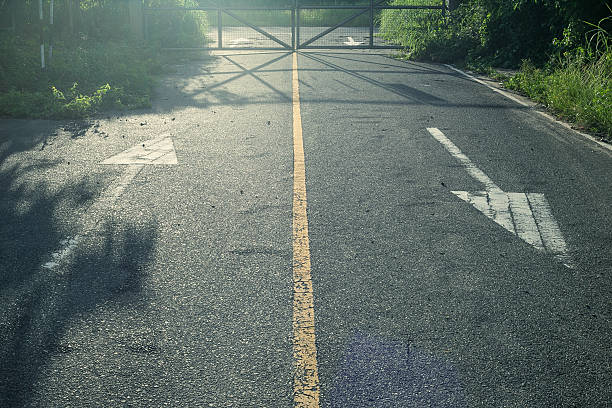
Picture this: You’ve just spent a small fortune on a beautiful, custom-wrought iron security gate for your property. It has a state-of-the-art motor, keypad entry, and it slides open silently at the push of a button. It’s perfect. Fast forward two years. The gate groans when it opens. It gets stuck halfway. The motor burns out because it’s working twice as hard.
What went wrong? Nine times out of ten, the problem isn’t the gate, and it isn’t the motor. The problem is the ground underneath it.
When you combine heavy-duty security fencing with a driveway, you are merging two totally different construction disciplines. This is the exact intersection where our dual B (General Building) and C-13 (Fencing) licenses come into play. Let’s talk about why installing an automated gate over a standard asphalt driveway requires serious, specialized engineering.
The Problem with Asphalt and Heavy Metal
Asphalt is a fantastic material. It’s durable, weather-resistant, and relatively easy to repair. But structurally speaking, asphalt is a flexible pavement. It’s designed to have a little bit of “give” under the weight of a car, expanding and contracting with temperature changes.
A high-security sliding gate, on the other hand, is a massive piece of rigid metal. It rolls back and forth on a metal track, often called a V-track.
If you simply bolt a metal V-track directly into flexible asphalt, you are setting a timer on a very expensive failure. Over time, the constant, concentrated weight of the gate rolling over the exact same spot will cause the asphalt to compress. The heat of the summer sun will soften the asphalt, allowing the track to sink or shift slightly.
Even a quarter-inch dip in the track is a disaster. It causes the gate to bind, derails the wheels, and puts immense strain on the expensive automated motor.
The Concrete Threshold Solution
To do this right, you cannot just pave the driveway and call the gate guy. The infrastructure for the gate has to be built into the paving plan.
When Gaga Construction tackles a project like this, we engineer a reinforced concrete grade beam right across the threshold of the driveway. We trench down past the frost line or topsoil, lay in steel rebar for structural strength, and pour a solid concrete footing. The V-track for the gate is embedded directly into this concrete while it cures.
Concrete, unlike asphalt, is rigid. It will not compress under the weight of a 1,000-pound sliding gate. Once the concrete threshold is cured and the track is perfectly level, we seamlessly pave the asphalt right up to the edges of the concrete. This gives you the smooth, beautiful look of an asphalt driveway, but with the bulletproof structural integrity required for a heavy-duty security gate.
The Hidden Veins: Trenching for Technology
There’s another critical reason why paving and fencing need to be handled by the same brain: electrical conduit.
Automated gates require power. They need communication lines for intercoms, low-voltage wire for loop detectors (the sensors buried in the driveway that tell the gate a car is waiting to exit), and sometimes fiber optics for security cameras.
If you hire a paving company that doesn’t understand gate automation, they will pave your driveway solid. Then, the gate installer shows up and has to saw-cut a massive, ugly trench right through your brand-new asphalt to run their wires. It ruins the aesthetic and creates a weak point in the pavement where water will eventually seep in.
Because we manage both sides of the project, we trench and lay all the necessary PVC conduit before the sub-base is even compacted. The wires run invisibly underneath the driveway, completely protected from the elements, leaving you with a pristine, unbroken surface.
One Contractor, Zero Finger-Pointing
The biggest headache homeowners face on combined projects is finger-pointing. The gate jams, and the gate company says, “The paving guy laid the asphalt unevenly.” You call the paving guy, and he says, “The gate company bought a cheap track.”
With Gaga Construction, the buck stops with us. We engineer the soil, we pour the concrete track footings, we run the electrical conduit, we lay the asphalt, and we install the high-security C-13 fencing. It all works perfectly together because it was designed as one single, cohesive system from day one.
Let's Build Something Lasting
Stop searching and start building. If you are ready to secure your home and boost your curb appeal, let’s talk. We are currently booking for the 2026 season.