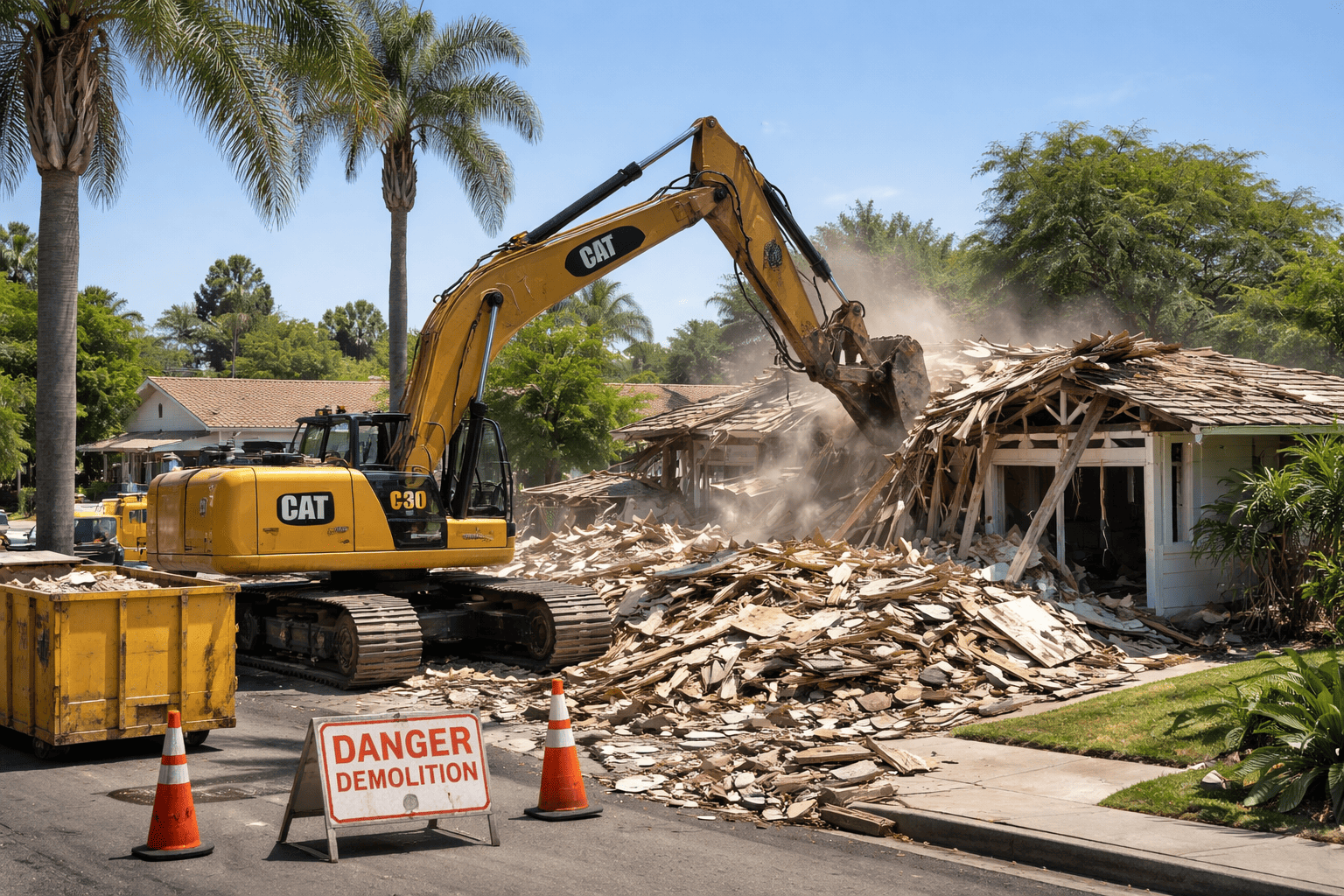
Planning a major renovation or full tear-down in California’s South Bay can feel overwhelming, but understanding the demolition process will make it far more manageable and predictable.
1. Pre-Demolition Planning and Permits
Before any machinery shows up, your contractor or architect will help create a demolition plan that outlines the scope of work, safety measures, and equipment to be used. In the South Bay, you will also need building and demolition permits, which may involve submitting plans, waste management or recycling reports, and in some jurisdictions, neighbor notifications or meetings.
Expect this phase to include checks for asbestos, lead paint, and other hazardous materials, as California regulations require proper testing and abatement before demolition. In some Bay Area cities, you must obtain an air quality district job number as part of the demolition permit package.
2. Utility Disconnections and Site Preparation
All utilities must be safely disconnected before demolition starts, including gas, electricity, water, sewer, phone, and internet. Local authorities or utility providers may need to inspect and confirm that service lines are capped or removed, which can add days or weeks to the timeline.
At this stage, you or your contractor will clear out furniture and personal belongings, secure the site with temporary fencing, and arrange for temporary facilities as needed. A demolition dumpster or haul-off plan is usually set up now so debris can be removed efficiently as work progresses.
3. Structural Tear-Down
Once permits are approved and utilities are disconnected, the physical tear-down begins using excavators or other heavy equipment, sometimes combined with hand demolition for tight spaces or delicate portions of the structure. Crews will strip out fixtures, cabinetry, and interior finishes, then remove walls, roofing, and foundations according to the approved plan.
Safety and dust control are major priorities in the South Bay, so you can expect barriers, water spray, and other best practices to limit impacts on neighbors and the surrounding environment.
4. Debris Removal and Recycling Requirements
Construction and demolition debris is sorted on-site or at a transfer facility so materials like concrete, metal, wood, and asphalt can be recycled. In Los Angeles County and many nearby jurisdictions, regulations typically require at least 65 percent of demolition debris by weight to be diverted from landfills, which your contractor must document.
Because of these diversion rules, debris removal is not just “hauling trash”; it is a regulated process that can influence how quickly your site is cleared, what haulers you can use, and how many inspections are required.
5. Excavation and Site Grading
After the structure is down and most debris is removed, crews will excavate for new foundations, utilities, or basements and begin grading the lot to meet engineering and drainage requirements. Grading involves cutting, filling, and compacting soil to create a stable, level building pad and properly direct stormwater away from structures.
California municipalities enforce excavation and grading regulations to prevent erosion, protect waterways, and reduce flood risk, so permits and inspections usually cover this stage as well. Best Management Practices, such as silt fences and erosion control blankets, must typically be in place before grading begins and maintained throughout the project.
6. Environmental Regulations and Timeline Impacts
Environmental and building regulations are a key reason South Bay demolition and grading timelines often run longer than homeowners expect. You will need to factor in time for environmental reviews, hazardous material testing, air quality approvals, debris recycling reports, and multiple inspections across demolition, debris removal, and grading.
In many Bay Area communities, the overall planning and permitting process for a major tear-down and rebuild can stretch from several months to over a year, even before vertical construction begins. Working with a local contractor who understands city-specific requirements can significantly reduce delays and help you schedule your renovation more accurately.
7. Final Cleanup and Ready-for-Build
Once excavation and site grading pass inspection, crews complete final cleanup so the lot is ready for new construction. This includes removing remaining debris, stabilizing disturbed soil, and confirming that sediment control measures are in place for the next phase of the project.
At this point, your demolition contractor typically hands the site off to your builder, who will use the newly graded pad and cleared permits to start foundation work for your renovation or new home.
SEO Tips: How South Bay Homeowners Search
Homeowners in the South Bay often search using phrases like “residential demolition South Bay,” “house tear down timeline California,” “grading and excavation contractor near me,” and “demolition permits in [city name].” Including city-specific terms such as “Manhattan Beach,” “Redondo Beach,” “Hermosa Beach,” “Torrance,” or “Santa Clara” in your research and contractor selection can help you find professionals who know local rules and review processes.