Home » Heat-Reflective Pavers & Pool Decks for SFV Summers
Get Your Free Estimate
Fill out the form below. We reply within 24 hours.
ON THIS PAGE
- Outdoor Improvement
Heat-Reflective Pavers & Pool Decks for SFV Summers
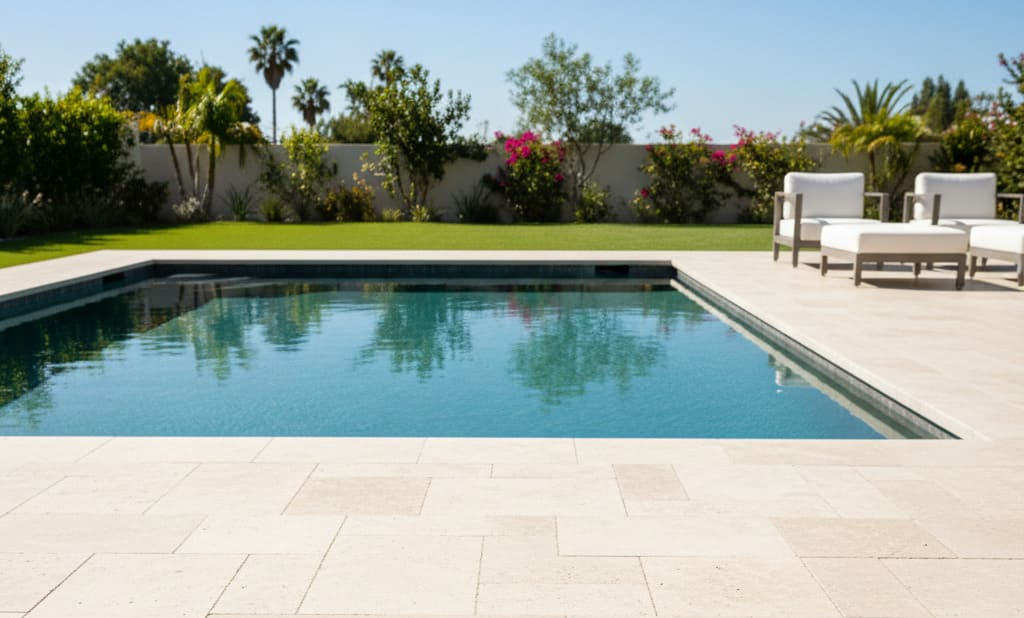
If you own a home in the San Fernando Valley—whether you’re enjoying the sunshine in Sherman Oaks, relaxing in Encino, or hosting poolside gatherings in Van Nuys—you know the summer heat is more than just warm; it’s intense. The dream of a refreshing pool deck can quickly turn into a nightmare of scorching concrete that makes walking barefoot impossible.
At Gaga US Construction, we understand that your outdoor space is an extension of your home. As licensed, local hardscape specialists, we focus on solutions that withstand the 100°F+ Valley heat. This guide compares the top heat-reflective materials—Porcelain Paving vs. Travertine Pavers—to help you build a deck that stays cool under the sun.
Traditional stamped concrete fails in the Valley because of Thermal Mass. Darker, dense concrete absorbs up to 95% of solar radiation, storing that heat and radiating it back at you well into the evening.
To fix this, we look for materials with a high Solar Reflectance Index (SRI)—the same standard the CEC uses for cool roofing—to bounce heat away from your feet.
The Cool Contenders: Porcelain vs. Travertine
When searching for paver installation in the SFV, the conversation quickly shifts to two premium, high-performance materials.
| Feature | Travertine (Natural Stone) | Porcelain (Engineered) |
|---|---|---|
| Surface Temp | Very Cool. Natural air pockets inhibit heat transfer. | Cool. Light colors reflect maximum sunlight. |
| Maintenance | Moderate. Requires sealing every 2-3 yrs. | Zero. Stain-proof and fade-resistant. |
| Slip Resistance | Naturally textured grip. | Engineered R11 Anti-Slip rating. |
| Best Use Case | Classic, "Old World" luxury aesthetic. | Modern, sleek, high-traffic areas. |
1. Travertine Pavers: The Natural Cooler
Travertine is a form of limestone characterized by a porous, pitted surface. These natural air pockets act as insulators, preventing the stone from holding heat. In lighter shades like Ivory or Silver, travertine is arguably the coolest material to the touch.
2. Porcelain Paving: The Modern Solution
Porcelain pavers are high-density ceramic. Unlike indoor tiles, outdoor porcelain is 20mm thick and incredibly strong. Because it absorbs virtually no water (0.05% absorption rate), it is immune to the freeze-thaw cracking that plagues lesser materials, and it handles pool chemicals without staining.
Installation: The "Hidden" Engineering
Choosing the right material is only half the battle. In the San Fernando Valley, proper installation must account for our specific expansive clay soil.
- Base Prep & Drainage: We excavate unstable topsoil and install a deep crushed aggregate base. This prevents the "heaving" caused when clay soil swells during winter rains.
- Edge Restraints: We install concrete borders or heavy-duty restraints to lock pavers in place, preventing lateral shifting over time.
- Expansion Joints: We strategically place joints to allow materials (especially porcelain) to expand in the summer heat without snapping.
Complementary Services
Once your cool, comfortable deck is installed, many homeowners choose to maximize their backyard ROI with complementary additions. From Artificial Grass (which further reduces heat radiation) to privacy walls, we handle the full scope.
Planning for the future? If you are considering an ADU (Accessory Dwelling Unit) down the road, let us know during the hardscape assessment. We can pre-run utility lines under your new pavers now, saving you thousands in demolition costs later.
Frequently Asked Questions
Let's Build Something Lasting
Stop searching and start building. If you are ready to secure your home and boost your curb appeal, let’s talk. We are currently booking for the 2026 season.