Home » South Bay Excavation Costs & Site Grading Guide (2026)
Get Your Free Estimate
Fill out the form below. We reply within 24 hours.
ON THIS PAGE
- Excavation Grading
South Bay Excavation Costs & Site Grading Guide (2026)
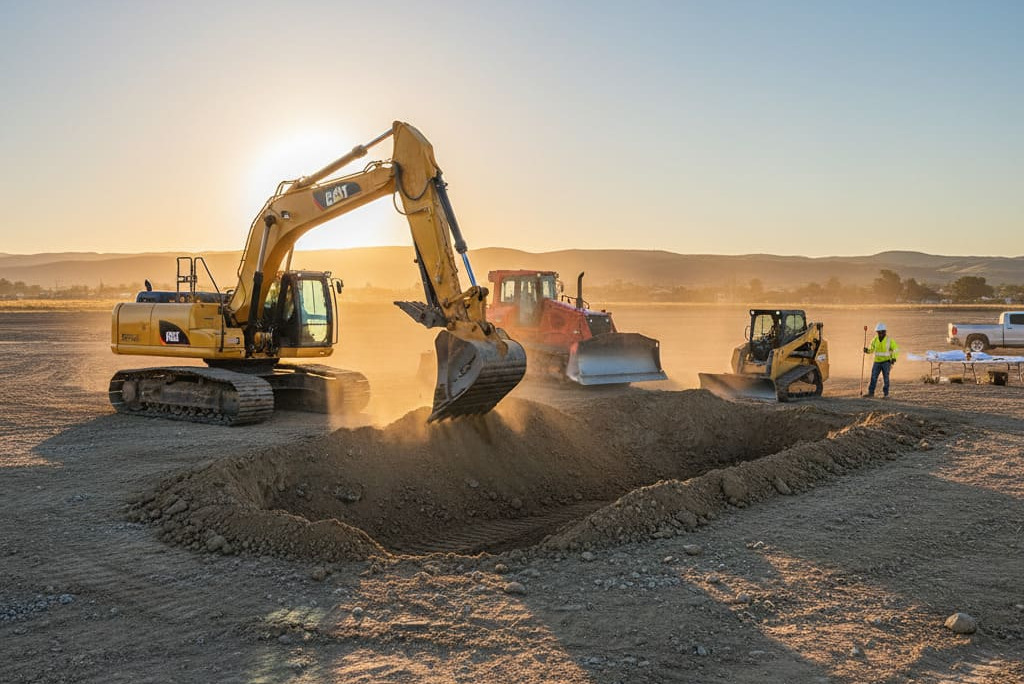
In the construction world, the most important work is often the least glamorous. Long before the beautiful framing goes up or the custom pavers are laid, the “dirt work” has to be done.
This phase is known as Excavation and Site Grading.
At GAGA US Construction, we view this as the “do or die” phase of any project. Whether we are digging a basement in Manhattan Beach or terracing a backyard in the Hollywood Riviera, the principle remains the same: your entire project is only as good as the ground it stands on.
A small mistake here—a failure to compact sandy soil or a miscalculation in slope—can lead to catastrophic failure years down the road, from flooded crawl spaces to cracked foundations. Here is everything South Bay homeowners need to know about this “boring” but absolutely essential process.
What is Residential Excavation? (It’s Not Just Digging)
Excavation is the process of moving earth. But it’s not just digging a hole; it is a precise, often surgical removal of soil, rock, and concrete to prepare for a new structure. In the South Bay, excavation presents unique challenges depending on your zip code.
The “Tight Access” Challenge
If you live in a “Walk Street” home in Manhattan Beach or a dense neighborhood in Hermosa, you don’t have room for massive machinery.
The GAGA Approach: We specialize in “tight access” excavation. We utilize mini-excavators, skid steers, and sometimes even conveyor belt systems to remove tons of dirt through narrow side yards without damaging your neighbor’s fence.
Common Excavation Projects
- Foundations
Digging trenches (“footings”) for a home addition or excavating a large pit for a basement (increasingly common in the Beach Cities to maximize square footage). - Utilities
Trenching for new sewer laterals, water lines, and electrical conduits. - Hardscape Prep
Removing the top 8-12 inches of “bad” organic topsoil to reach the stable subsoil before installing a driveway or patio. - Retaining Walls
Digging deep, wide trenches for wall footings—crucial for hillside properties. - Swimming Pools
The most obvious form of excavation, requiring the removal of hundreds of cubic yards of dirt.
Safety First: A key part of professional excavation is knowing what lies beneath. We always coordinate with 811 (DigAlert) before a single shovel hits the ground.
The South Bay Soil Spectrum
One of the biggest misconceptions is that “dirt is dirt.” In the South Bay, the ground varies wildly, and your contractor must know the difference.
The Beach Cities (Sand)
In Manhattan, Hermosa, and parts of Redondo, we are often digging in pure sand.
- The Risk: Sand is easy to dig but prone to collapsing. It requires special “shoring” (temporary walls) during excavation to prevent the hole from caving in on workers.
- The Seismic Concern: Sand is prone to liquefaction during earthquakes. We often have to excavate deeper to reach stable ground or import engineered fill to stabilize the site.
The Hill (Clay & Stone)
In Palos Verdes, Rolling Hills, and San Pedro, we deal with rock and expansive clay.
- The Risk: Clay expands when wet and shrinks when dry. This movement can snap a foundation in half. Excavation here often involves “over-excavation”—removing the volatile clay and replacing it with stable, non-expansive import soil.
- The Hard Dig: We often encounter bedrock that requires hydraulic breakers (jackhammers mounted on excavators) to chip away.
The Art of Site Grading
If excavation is “digging,” grading is “shaping.” Grading is the art and science of sculpting the land to control the flow of water. With the recent increase in “Atmospheric River” storms in California, proper grading has never been more critical.
The Golden Rule: Positive Drainage
Water must always flow away from your house. This sounds simple, but it is the most violated rule in construction. We have seen luxury homes with flooded living rooms because an amateur landscaper sloped a flower bed toward the stucco.
A professional grading contractor uses laser levels to create a “positive grade”—a subtle slope (usually 2%, or 1/4 inch per foot) that directs all water away from your foundation and into a safe area, such as:
- A street drain (via a core drill in the curb).
- A “swale” (a shallow, grassy channel in the yard).
- A French drain system.
Hillside Grading (Cut and Fill)
For our clients in the Hollywood Riviera or Palos Verdes, flat land is a luxury. We often have to manufacture flat land using a technique called “Cut and Fill.”
In the South Bay, trucking dirt away (“exporting”) or bringing dirt in (“importing”) is incredibly expensive due to traffic and dump fees. A skilled excavation contractor tries to “balance the site”—designing the project so the amount of dirt we cut equals the amount we need to fill. This saves you thousands of dollars in haul-away fees.
The Science of Compaction
This is the step that separates the pros from the amateurs. You cannot simply dump 3 feet of loose dirt into a low spot and build a patio on it. That loose soil is full of air. The solution is Engineered Fill.
- Lifts: We add the soil back in thin layers called “lifts” (usually 6-8 inches thick).
- Pounding: After each lift, we use a heavy machine (a jumping jack or vibratory plate compactor) to pound the air out of the soil.
- Testing: On structural projects, a Deputy Inspector will drive a nuclear density gauge into the ground to certify that we have achieved “90% or 95% relative compaction.”
Navigating Local Regulations
Excavation in the South Bay involves significant red tape. We handle the bureaucracy for you, including:
- Grading Permits: Required if moving more than 50 cubic yards of soil or altering drainage.
- Haul Routes: Cities like Torrance and Lomita have strict routes to avoid schools and weight-restricted roads.
- Dust Control (AQMD): We strictly adhere to watering protocols to keep neighbors’ cars and windows clean.
Conclusion: The Invisible Investment
Excavation and grading are the unglamorous, invisible foundation of your entire project. Once the grass is planted and the patio is furnished, you will never see the work we did underground.
But you will feel it. You will feel it in a driveway that doesn’t sink after five years. You will see it when a heavy January storm hits and your yard drains perfectly while the street floods.
Don’t cut corners on the dirt work. Hiring a licensed, experienced South Bay excavation contractor like GAGA US Construction is the best investment you can make to ensure your property remains safe, stable, and valuable for decades to come.
Frequently Asked Questions
Let's Build Something Lasting
Stop searching and start building. If you are ready to secure your home and boost your curb appeal, let’s talk. We are currently booking for the 2026 season.