Home » 2026 Los Angeles Fence Cost Guide and Market Analysis: Strategic Report on Pricing, Regulation, and Material Science
Get Your Free Estimate
Fill out the form below. We reply within 24 hours.
ON THIS PAGE
- Fence Installation
2026 Los Angeles Fence Cost Guide and Market Analysis: Strategic Report on Pricing, Regulation, and Material Science
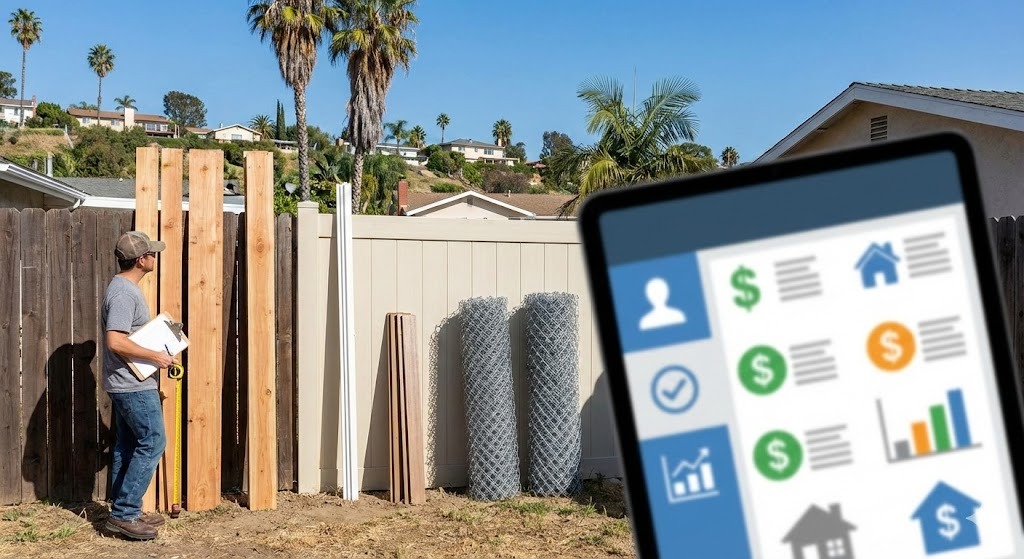
The residential and commercial fencing market within Los Angeles County has entered a period of structural recalibration as we move into the 2026 fiscal year. At GAGA US Construction, we have documented a shift toward "high-baseline" stability. While material costs have plateaued at elevated levels, labor and regulatory costs continue to exert significant upward pressure. This report provides an exhaustive analysis of the fencing ecosystem, integrating macroeconomic trends, hyper-local zoning, and material science to serve as the definitive guide for property owners in Southern California.
1. Executive Market Intelligence
Fencing in Los Angeles is no longer merely about erecting boundaries; it has evolved into a complex interplay of aesthetic architectural integration, wildfire defense (WUI compliance), and security hardening. While raw lumber prices have softened from pandemic peaks, the "all-in" installed cost remains on an upward trajectory. This divergence is driven by the acute labor shortage in California's construction sector—a deficit forecast to hit nearly 499,000 skilled workers by the end of 2026.
Furthermore, the Los Angeles market is distinct in its regulatory burden. The cost of compliance, including permits, surveys, and engineering mandates, has become a substantial line item, often accounting for 10-15% of total project costs in complex hillside scenarios. At the upper end, homeowners are aggressively shifting toward "lifetime" materials like heavy-gauge vinyl and premium composites, effectively front-loading investment to mitigate future expenditures.
2. Economic Landscape and Inflationary Vectors
To understand the 2026 pricing model, one must dissect the economic vectors acting upon the local industry. Aggregated data points to a sector-wide cost escalation of approximately 4.7% for the calendar year 2026.
2.1 The Labor Crisis and Wage Escalation
The single most significant driver of cost inflation in 2026 is labor. California’s construction workforce is aging, and the pipeline of new entrants is insufficient to meet demand. For legitimate, licensed contractors (C-13 classification), the "billable" cost of a man-hour is burdened by high overheads: workers' compensation, general liability (exacerbated by wildfire risks), and mandated benefits. On public works projects, the total compensation package for a fence builder in Los Angeles County is now mandated at over $76 per hour.
| Labor Classification | Base Hourly Rate | Total Benefit Load | Total Billable Cost (Est.) |
|---|---|---|---|
| General Laborer (Non-Union) | $18.00 - $22.00 | $5.00 - $8.00 | $23.00 - $30.00 |
| Skilled Fence Installer (Private) | $28.00 - $45.00 | $10.00 - $15.00 | $38.00 - $60.00 |
| Prevailing Wage Fence Builder | $48.25 | $27.94 | $76.19 |
2.2 Tariff Sensitivity and Supply Chains
As a logistics hub, Los Angeles is exposed to international trade volatility. The outlook for 2026 is clouded by anticipated tariff adjustments on Canadian lumber—the primary supplier of Western Red Cedar. With duties on Canadian softwood potentially exceeding 45% by early 2026, retail prices at LA yards remain sensitive. Consequently, GAGA US Construction, like many industry leaders, is currently limiting quote validity to 7 or 14 days to protect property owners from sudden commodity spikes.
3. Regulatory Framework: Zoning and Permitting
Navigating the overlapping jurisdictions of the City of Los Angeles and unincorporated territories requires a nuanced understanding of zoning codes.
3.1 Jurisdiction Analysis: City vs. County
- City of Los Angeles: Maintains strict controls on front-yard aesthetics. Fences in the required front yard are limited to 42 inches (3.5 feet). The "front yard" is defined by the setback requirement of the zone (typically 20 feet in R1 zones), not the physical lawn.
- Unincorporated LA County: Generally offers more leniency; building permits are not required for fences 6 feet or less, provided they aren't masonry or retaining walls. However, zoning clearance is still necessary to avoid visibility triangle violations.
3.2 The Retaining Wall Complex
A 3-foot retaining wall with a 6-foot wood fence on top may be legally viewed as a 9-foot structure, violating the 6-foot limit for side yards. The 2026 code cycles have reinforced the need for engineering when fences act as "wind sails" on top of masonry. Contractors now often require engineering calculations for "combo" walls, adding $1,000–$2,000 to soft costs.
3.3 Neighbor Relations and "Spite Fences"
Civil Code 841.4 addresses "spite fences" exceeding 10 feet, while the Good Neighbor Fence Law (Civil Code 841) governs cost-sharing. To legally enforce a 50% contribution from a neighbor, you must provide 30 days' written notice before construction begins. Failure to do so can forfeit your right to reimbursement.
4. Comprehensive Material Cost Analysis
4.1 Wood Fencing: The Traditional Standard
- Redwood: Native to California and naturally resistant. High-grade "Construction Heart" costs $70–$120 per linear foot installed. 2026 supply constraints make this a luxury choice best reserved for facade returns.
- Western Red Cedar: The pragmatic alternative offering better dimensional stability in LA’s dry heat. Installed costs range from $45 to $90 per linear foot. Requires staining every 2-3 years ($1.50 - $3.00/sq ft).
- Pressure Treated Pine: The economy option ($25–$40/lf). While chemically rot-resistant, it is hydroscopic and prone to warping in the marine-layer-to-sun cycle.
4.2 Vinyl (PVC): The Low-Maintenance Challenger
The average installed cost in LA is $35 to $70 per linear foot. Professional-grade vinyl with 0.135+ inch wall thickness and high Titanium Dioxide (TiO2) content is essential to survive the San Fernando Valley sun without sagging or yellowing.
4.3 Composite Fencing: The Premium Tier
Composite (e.g., Trex, SimTek) ranges from $90 to $130+ per linear foot. While the upfront cost is higher, the 25-year warranty and zero-maintenance requirement often result in a lower Total Cost of Ownership over 20 years.
| Material | Life Expectancy (LA) | Maintenance | Avg. Cost/LF (Installed) |
|---|---|---|---|
| Chain Link | 20-30 Years | None | $18 - $28 |
| PT Pine | 10-15 Years | High | $25 - $40 |
| Cedar | 15-20 Years | Moderate | $45 - $75 |
| Redwood (Con Heart) | 20-25 Years | Moderate | $70 - $110 |
| Vinyl (Pro) | 30+ Years | Low | $45 - $70 |
| Composite | 25-30+ Years | Very Low | $90 - $130 |
5. Site Challenges and Topography
The "standard" bid assumes flat lots. In LA, hillsides (Silver Lake, Pacific Palisades) introduce the Hillside Multiplier. Carrying materials up narrow paths can effectively double labor costs, adding $20-$40 per linear foot. Furthermore, hitting "caliche" or granite rock during drilling can trigger "hard dig" clauses, billing at $150-$200 per hole.
6. Strategic Recommendations and Outlook
- Buy Once, Cry Once: Labor is 50% of the cost. Choosing a 30-year material (Vinyl/Composite) is mathematically superior to wood that needs replacement in 12 years.
- Survey First: Encroachment lawsuits are costly. A boundary survey ($1,200–$3,200) is insurance for your investment.
- Neighbor Diplomacy: Polite, formal notice 30 days in advance is the single most effective cost-saving measure available under CA law.
Frequently Asked Questions
1. How does salt air in coastal zones (Venice/Malibu) change my maintenance schedule?
In coastal zones, even "low-maintenance" materials need a freshwater rinse every few months to prevent salt buildup. For metal, we strictly use Aluminum. While aluminum doesn't rust, the powder coating can oxidize; a seasonal wash preserves the finish for 50+ years.
2. Does building an ADU (Accessory Dwelling Unit) change my fencing height rights?
Under recent SB 9 and ADU laws, privacy is a major concern. However, ADU laws generally do not override base zoning height limits for fences. You must still adhere to the 6ft side/rear limit unless you obtain a specific variance for privacy screening near the ADU entrance.
3. Can graffiti be removed from Composite or SimTek fencing?
Yes. SimTek (polyethylene) and high-end capped composites are non-porous. Most graffiti can be removed with a pressure washer or specialized cleaners without staining the material—a major advantage for properties backing into public alleys.
4. What are the specific pool safety fence codes for Los Angeles in 2026?
LA County requires pool fences to be at least 60 inches (5 feet) tall with self-closing, self-latching gates. The gap at the bottom cannot exceed 2 inches, and vertical slats must be close enough that a 4-inch sphere cannot pass through.
Let's Build Something Lasting
Stop searching and start building. If you are ready to secure your home and boost your curb appeal, let’s talk. We are currently booking for the 2026 season.