Home » Expert Fence Post Installation and Repair in Los Angeles 2026
Get Your Free Estimate
Fill out the form below. We reply within 24 hours.
ON THIS PAGE
- Fence Installation
Expert Fence Post Installation and Repair in Los Angeles 2026
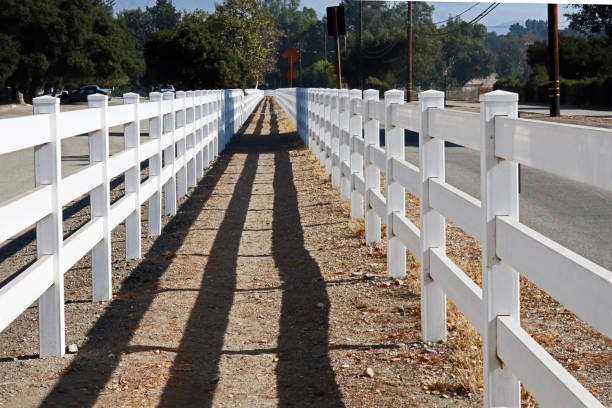
If you own a home in Los Angeles County, there is a very high probability that you have looked out your back window recently and sighed. It’s the "LA Lean"—that precarious tilt of a wood fence that looks like it’s had one too many drinks. Maybe it happened after that last Santa Ana wind event, or maybe it’s been a slow-motion decline over the last five years.
Here is the hard truth: fences in Los Angeles have it rough. Between the expansive clay soil that acts like a sponge, the drywood termites that treat your property like an all-you-can-eat buffet, and the bureaucratic maze of the Department of Building and Safety, fixing a fence here is not just a weekend project. It is a strategic operation.
Whether you are looking to patch up a few wobbly posts or tear the whole thing down and start fresh, this guide is going to walk you through exactly what you need to know for 2025. We are going to skip the contractor jargon and get straight to the money-saving, headache-preventing facts.
Why Your Fence is Failing (It’s Not Just Old Age)
Before you throw money at a repair, you have to understand why the fence failed. In Los Angeles, it is usually a "perfect storm" of three things: dirt, wind, and bugs.
1. The Soil Problem: The "Sponge" Effect
A huge chunk of the LA Basin—from the valleys to the coastal mesas—sits on expansive clay soil. If you have ever tried to dig a hole in your backyard in August, you know it’s like hacking at concrete. But in January, that same dirt turns into a sticky, heavy muck.
Here is what that does to your fence posts: when it rains, the clay absorbs water and expands, pushing against the concrete footing of your post. When it dries out, the soil shrinks and pulls away. Over a few years, this constant "heave" loosens the grip on your posts. It creates a gap where water can pool right at the base of the wood. Once water sits against the wood, rot is inevitable.
2. The Santa Ana "Sail" Effect
We all know the Santa Anas. We are talking about sustained winds of 40 mph with gusts hitting 70 mph or more in foothills like Pasadena or Sylmar. A standard 6-foot tall privacy fence acts exactly like a sail on a ship. When a 60 mph gust hits a solid wood fence, it exerts hundreds of pounds of lateral force.
3. The Termite Factor
You can't talk about construction in Southern California without talking about termites. We have two main types here.
- Subterranean Termites: These guys live in the dirt and eat the wood from the bottom up. They love fence posts.
- Drywood Termites: These fly in and eat the wood from the inside out. They love your fence rails and pickets.
The Great Debate: Repair vs. Replace
So, do you bandage the wound or perform surgery?
The Repair Scenario
If your fence rails (the horizontal boards) and pickets (the vertical boards) are still grey but solid, and only one or two posts are broken, you can get away with a repair.
The most common fix is "sistering." This involves digging out the concrete on one side of the broken post and setting a new post right next to it, then bolting them together. It’s ugly, but it works for a while.
The Replacement Scenario: The New Gold Standard (Steel)
If you push on the fence and the whole line waves like a snake, or if the wood crumbles when you poke it with a screwdriver, the structural integrity is gone. You need to replace the posts.
If you take one thing away from this article, let it be this: Stop putting wood posts in the ground.
In 2025, the smartest money is on galvanized steel posts. You might know them by brand names like "PostMaster." Unlike the ugly round pipes you see on chain-link fences, these are designed to be hidden. They have a flat surface so you can screw wood pickets right over them. From the outside, it looks like a beautiful wood fence. Inside, it’s reinforced with steel.
Navigating the "Good Neighbor" Law
Before you dig a single hole, you need to deal with the person living next door. In California, we have something called the Good Neighbor Fence Act (Civil Code § 841). Here is the gist: If a fence is on the property line, you and your neighbor are generally responsible for splitting the cost 50/50.
However, you cannot just build a fence and hand them a bill. That will get you laughed out of small claims court. You must follow the procedure:
- The 30-Day Notice: You must legally give your neighbor 30 days' written notice before starting work.
- The Details: The letter needs to say what the problem is, what you want to do (e.g., "Replace with redwood dog-ear fencing"), how much it will cost (attach estimates), and how you want to split the bill.
Permits: Do You Need One?
In the City of Los Angeles, the Department of Building and Safety (LADBS) has specific triggers for permits. If you ignore this, you risk a "Order to Comply," which means tearing down your brand new fence.
- You DO NOT need a permit if: It is a wood/vinyl/metal fence under 7 feet high (in the rear/side yard) or a masonry wall under 3.5 feet high.
- You DO need a permit if: The fence is over 7 feet tall, or you are building a masonry wall (block wall) over 3.5 feet. This is strict because of earthquake risks.
Choosing Your Wood: Don't Get Scammed
Most contractors will quote you for "Redwood." But that is a vague term. You need to verify the grade.
- Construction Common (Sapwood): The cheap stuff. It has streaks of white (sapwood) which has zero natural resistance to termites or rot.
- Construction Heart (Con Heart): The reddish-brown wood from the center of the tree. It is loaded with tannins that naturally repel bugs. It costs 20-30% more but lasts twice as long.
The Real Cost of Fencing in LA (2025 Breakdown)
Prices vary wildly from the Valley to Long Beach, but here are realistic ranges for materials + labor per linear foot.
| Type | Estimated Cost (Linear Ft) | Verdict |
|---|---|---|
| Pressure Treated Pine | $25 - $45 | Avoid. Warps in LA sun. Budget only. |
| Standard Redwood (Dog-Ear) | $35 - $60 | The Standard. Verify wood grade. |
| Premium Redwood + Steel Posts | $50 - $80 | "Buy it for Life." Best value. |
| Vinyl (Privacy) | $35 - $65 | Zero maintenance, but can crack in heat. |
Hillside Properties: The Danger Zone
Retaining walls are massive in LA. If your fence is sitting on top of a retaining wall that holds back a slope, you have to be careful. The wind pushing on your fence acts like a giant lever on the retaining wall.
If you need to repair a fence on a slope, you might need a "hillside grading" permit or a structural engineer. Do not cut corners here—a failed wall on a slope can slide into your neighbor's living room.
Common Questions
Let's Build Something Lasting
Stop searching and start building. If you are ready to secure your home and boost your curb appeal, let’s talk. We are currently booking for the 2026 season.