Home » Secure Dog Fencing: Safety for Your Furry Friends in Los Angeles 2026
Get Your Free Estimate
Fill out the form below. We reply within 24 hours.
ON THIS PAGE
- Fence Installation
Secure Dog Fencing: Safety for Your Furry Friends in Los Angeles 2026
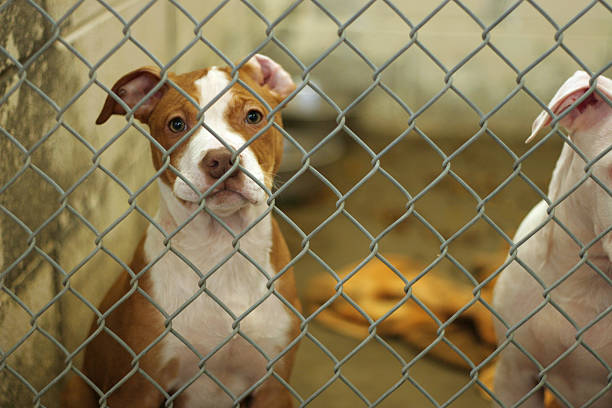
If you live in Los Angeles, you know that our relationship with our backyards is... complicated. It’s not just a patch of grass; it’s an extension of our living room, a status symbol, and for the 5.3 million dogs calling LA County home, it’s their entire world. But keeping that world safe in 2025 has become a surprisingly complex challenge.
Between the rise of "Barkitecture" in luxury home design and the very real threat of urban coyotes, putting up a simple wood fence just doesn't cut it anymore. Whether you just adopted a "pandemic puppy" that is now a high-energy adult or you are remodeling a property in Hidden Hills, this guide dives deep into the realities of securing your home for your dog. We aren't just talking about keeping them in; we're talking about keeping the dangers of Los Angeles out.
The Rise of "Barkitecture" in Southern California
You might have heard the term thrown around by real estate agents in Newport Beach or the Hollywood Hills. "Barkitecture" is the shift toward designing homes with pets as primary residents, not afterthoughts. In 2025, the U.S. pet industry is projected to hit $157 billion in sales, and a huge chunk of that is going into home modifications.
In Los Angeles, this trend is reshaping the market. We are seeing a move away from the lonely doghouse in the corner to integrated "pet suites," automatic cooling stations, and fences that blend seamlessly with high-end architecture. Homeowners are no longer willing to slap up a chain-link fence that lowers their property value. They want barriers that are safe for a 10-pound Maltipoo but strong enough to stop a coyote.
The Coyote Problem: It’s Not If, It’s When
Let’s address the elephant—or rather, the predator—in the room. In Los Angeles, coyotes are not just a rural problem. They are navigating the streets of Beverly Hills, Santa Monica, and Silver Lake with terrifying confidence.
Mechanical Defense: The Coyote Roller
One of the most effective solutions we see in the market is the "Coyote Roller." Imagine a rolling pin attached to the top of your fence. When a coyote tries to grab the top rail to pull themselves up, the roller spins, denying them traction and sending them back to the ground.
Cost Reality Check: These systems are an investment. A 100-foot DIY kit typically costs around $886, while larger setups for estate-sized properties (200+ feet) can run upwards of $1,700 for the materials alone.
The Anti-Dig Apron (L-Footer)
Coyotes—and your own dogs—are also diggers. An "L-footer" is a wire mesh apron buried underground at the base of your fence, extending outward. When an animal tries to dig at the fence line, they hit the mesh. For a typical 150-foot yard, materials for this can add $450 to $1,000 depending on the gauge of wire you choose.
Navigating the Maze: Permits and Zoning in LA
Before you dig a single post hole, you need to deal with the bureaucracy. Los Angeles isn't one single jurisdiction; it's a patchwork of 88 cities, each with different rules.
The Front Yard Trap
The most common mistake homeowners make is assuming they can fence their front yard for their dog. In most of Los Angeles, fences in the front yard setback are strictly limited to 42 inches (3.5 feet) in height. For a Golden Retriever or a Shepherd, a 3.5-foot fence is an invitation to jump, not a barrier. If you are in a "View Preservation" district like Palos Verdes Estates, the rules are even stricter, often requiring transparent glass or wrought iron.
The Permit Timeline
In 2025, getting a fence permit isn't instantaneous. While simple over-the-counter permits for standard wood fences can take 1-3 days, anything involving a retaining wall or a hillside can drag on for 4 to 8 weeks.
Material World: Choosing Your Barrier
The material you choose dictates maintenance, cost, and safety. Here is how the big four stack up in the harsh Southern California sun.
- Vinyl (PVC): The champion of the suburbs. It doesn't rot, stays cool, and offers zero footholds for climbing. Expect to pay $60 - $100 per linear foot installed.
- Wood (Redwood & Cedar): The classic choice. Must use Redwood or Cedar; pine warps. Watch out for "kickboards" rotting out. Cost is slightly lower at $50 - $85 per foot.
- Tubular Steel & Iron: Premium look, but watch for gaps. Standard bars are 4" apart—easy for small dogs to slip through. You need "Puppy Pickets" (a second row of bars) to narrow the gap. Cost: $90 - $150+ per foot.
- Wire Mesh ("Hog Wire"): Trendy "modern farmhouse" look. Ensure grid is 2x4 inches or smaller to prevent trapped paws.
Petscaping: Designing the Yard Inside the Fence
The Artificial Turf Revolution
Synthetic grass is the go-to for dog owners in 2025, but you can't just buy the cheap stuff. You need a "Pet System."
- Drainage is King: Standard turf backs are coated in urethane, which traps urine odor. Pet turf has a permeable backing that lets liquids drain instantly.
- Cooling Infills: Artificial grass gets hot—up to 160°F. You absolutely need a cooling infill like Zeolite, a volcanic mineral that traps ammonia odors and keeps the surface cooler.
The Rebate: The LADWP has aggressive rebate programs in 2025, offering up to $5.00 per square foot for replacing grass with sustainable landscaping, which can offset the $12-$20/sq. ft. cost of premium pet turf.
Toxic vs. Safe Plants
Many plants that thrive in LA are deadly to dogs. The Sago Palm is enemy number one—highly toxic and capable of causing liver failure. Also beware of Foxtails, dried weeds that burrow into paws and ears.
The Bottom Line on Cost
If you are fencing a standard backyard (approx. 150 linear feet) in Los Angeles in 2025, here is a realistic budget breakdown:
| Type | Estimated Budget | Notes |
|---|---|---|
| Budget (Chain Link) | $3,000 - $5,250 | Effective, but climbable and unsightly. |
| Standard (Wood Privacy) | $5,500 - $9,000 | Looks good, requires staining/maintenance. |
| Premium (Vinyl/Composite) | $7,000 - $12,000 | "Set it and forget it." Best ROI. |
| Luxury (Iron/Glass) | $9,000 - $20,000+ | High-end aesthetics, view preservation. |
Common Questions
Let's Build Something Lasting
Stop searching and start building. If you are ready to secure your home and boost your curb appeal, let’s talk. We are currently booking for the 2026 season.