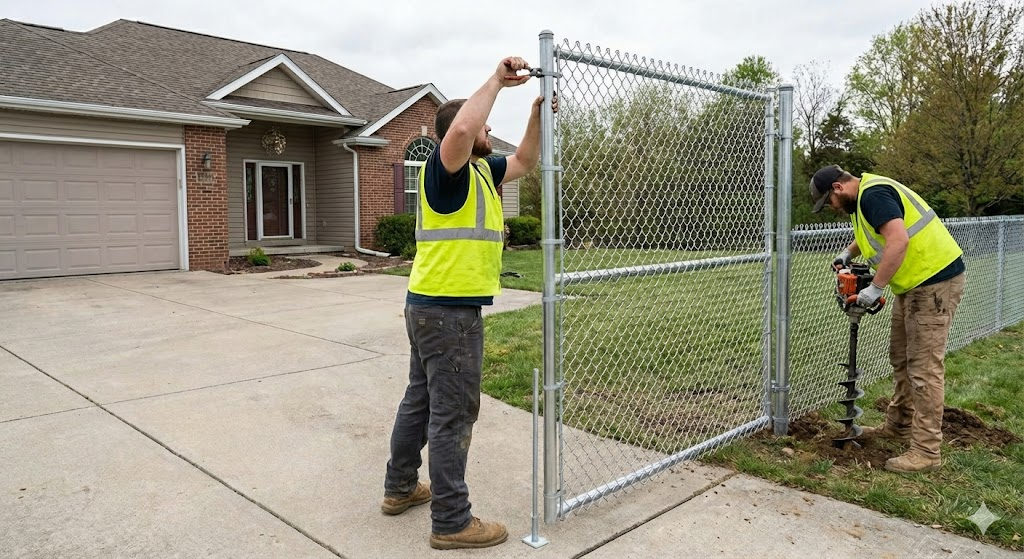
An automated gate is more than just a luxurious entryway; it is the first line of defense for your home or business. It manages traffic, secures assets, and defines your property's curb appeal. However, unlike a static fence, an automated gate is a complex machine operating in a harsh outdoor environment. It combines heavy structural steel, sensitive electronics, and high-torque motors—a combination that demands respect and expertise.
When these systems fail, the inconvenience is immediate, but the safety risks are often invisible. Whether you are considering a new perimeter security system or dealing with a gate that refuses to close, understanding the landscape of professional gate installation and repair services is critical. This guide cuts through the noise to provide you with the technical insights, cost expectations, and safety protocols necessary to make informed decisions in 2025.
1. The "Stewardship" of Safety: Why Professional Installation is Non-Negotiable
In the world of automated access, safety is not a feature; it is a regulatory requirement. The days of installing a simple motor on a hinged farm gate are over. Today, professional gate installation and repair services are governed by strict standards, specifically UL 325 and ASTM F2200.
Understanding UL 325 and Liability
If you hire a handyman to patch up your gate sensor, and they bypass the safety circuit to "just make it work," you are sitting on a liability time bomb. UL 325 standards mandate that every modern gate operator must have at least two independent means of entrapment protection.
- Primary Protection The motor’s internal sensors that detect resistance (like a garage door reversing when it hits an object).
- Secondary Protection External devices like photo eyes (beams of light that span the driveway) or reversing edges (pressure-sensitive strips on the gate's leading edge).
A true expert in professional gate installation and repair services will act as a steward of these safety standards. They will refuse to work on a non-compliant system unless the repair includes bringing it up to code. This isn't an upsell; it is a requirement to prevent crushing injuries and catastrophic lawsuits.
ASTM F2200: Geometric Safety
While UL 325 covers the electronics, ASTM F2200 covers the physical gate. Did you know that a sliding gate cannot have a gap larger than 2.25 inches between the gate and the fence post? This "2.25-inch rule" is designed to prevent children from reaching through and getting an arm trapped as the gate slides open. Professional installers fabricate gates specifically to meet these geometry requirements, using mesh screens and guarded rollers to eliminate pinch points.
2. Anatomy of a Gate System: Choosing the Right Hardware
Before you commit to a repair or a new install, it helps to understand the mechanics at play. The longevity of your system depends heavily on selecting the right architecture for your terrain.
Swing Gates
Swing gates are classic and elegant but mechanically demanding. The geometry of a swing gate places massive leverage on the hinge post. A 12-foot steel gate can exert thousands of pounds of tension on the top hinge.
The "Sag" Factor: Over time, gravity wins. Posts shift in the soil, or standard barrel hinges grind down. Professionals use heavy-duty, sealed ball-bearing hinges (often rated for 2,000+ lbs) to ensure the gate swings effortlessly for years.
Wind Load: A solid wood or panel gate acts like a sail. In high winds, the force can strip the gears of a standard motor. High-quality services will recommend "harmonic" operators or high-torque hydraulic actuators for solid gates to withstand this back-pressure.
Sliding Gates: V-Track vs. Cantilever
- V-Track The gate rolls on a "V" shaped wheel along a piece of angle iron bolted to the driveway. These are common and structurally sound but require constant maintenance. A single piece of gravel or packed snow on the track can derail the gate.
- Cantilever The superior choice for snow-heavy regions or commercial sites. The gate hangs suspended above the driveway, supported by rollers on the side posts. No part of the gate touches the ground, making it immune to gravel, ice, and leaves.
3. Troubleshooting Like a Pro: When to Call for Help
Not every issue requires a service truck roll. However, distinguishing between a simple reset and a critical component failure can save you hundreds of dollars. Here is how experts approach diagnostics.
- The "Phantom" Opening Does your gate open on its own at 3:00 AM? This is usually RF interference from military bases or strong towers. Modern "Security+ 2.0" receivers use hopping frequencies to prevent this. It could also be a shorted Loop Detector wire in the driveway.
- The "Stop and Reverse" If your gate moves two feet, stops, and backs up, it is hitting an obstacle—even if you can't see one. Rusted hinges or bad wheels create friction, which the motor senses as an object.
- The "Dead" System If the gate is totally unresponsive, check the GFCI breaker first. Second, check battery health. Most modern DC gates run off batteries; if they are 3-5 years old, they may drop to zero amperage under load.
4. The Economics of Repair vs. Replace (2025 Market Data)
Inflation and labor shortages have shifted the pricing landscape. Knowing the numbers helps you budget effectively.
Diagnostic fee to get a stocked truck to your site. Hourly labor for complex repairs runs $95 - $150/hr.
Control boards are the brain of the system. Safety sensors (UL 325 photo eyes) cost $150 - $350 installed.
If repair costs exceed 50% of a new system, or if the system cannot be made UL 325 compliant, replacement is the only responsible choice.
5. Seasonal Maintenance: Protecting Your Investment
You don't drive your car for 50,000 miles without an oil change, yet many gate owners neglect maintenance until the chain snaps. A proactive approach includes a bi-annual regimen.
Winterization Protocols
If you have a hydraulic swing gate operator, the fluid thickens in the cold, making the gate move sluggishly. In extreme northern climates, you may need a heater installed in the operator housing or synthetic "arctic" fluid. Also, load test backup batteries before the first freeze.
Lubrication Logic
Never use heavy grease on exposed chains or screws. Grease is sticky; it attracts sand and grit, turning into a grinding paste that wears down metal faster. Instead, use White Lithium Grease or a silicone-based spray.
6. Hiring the Right Contractor: Vetting for Competence
The barrier to entry in this trade is low, but the stakes are high. When searching for professional gate installation and repair services, look for these specific signals of trust:
- IDEA Certification Look for technicians certified by the Institute of Door Dealer Education and Accreditation (IDEA).
- Specialized Equipment A professional gate company arrives in a truck stocked with welding equipment and concrete coring drills. A contractor showing up with just a ladder and a hammer is a red flag.
- Detailed Quotes Your estimate should itemize the hardware. "One Gate Motor" is not enough. It should specify the exact model and safety accessories.
Conclusion: Security Requires Strategy
Your automated gate is a dynamic system that requires precise engineering and ongoing care. By prioritizing safety compliance, choosing the right mechanical design for your property, and adhering to a maintenance schedule, you protect your property and your wallet.
Whether you need a simple hinge weld or a complete system overhaul, investing in professional gate installation and repair services is an investment in peace of mind. Don't wait for a breakdown to leave you stranded—assess your system today.