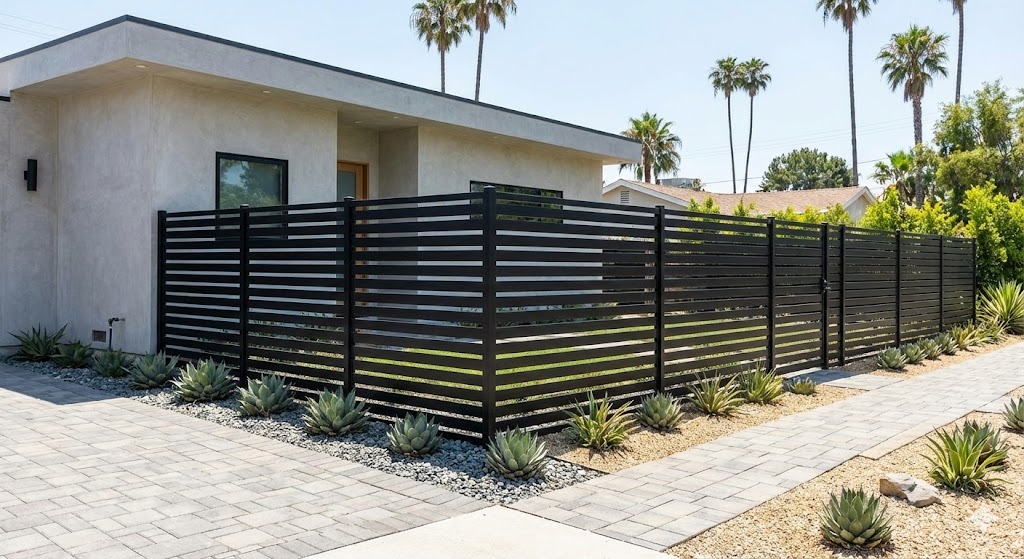
At GAGA US Construction, we are seeing a massive shift. The "romantic" idea of iron is being replaced by the pragmatic performance of aluminum. This isn't the flimsy material you see at big-box stores; modern architectural aluminum mimics the weight and profile of iron but eliminates the rust. For our clients—whether you are a homeowner in the Hills or a developer in Santa Monica—this guide explains why aluminum is the superior engineering choice for our specific climate and topography.
The Rust Problem: Why Steel Fails in LA
To understand the switch, you have to look at what happens to steel (often mislabeled as "wrought iron") in Southern California. Modern "iron" fences are usually mild carbon steel. In LA, especially west of the 405, steel reacts with oxygen and moisture to create iron oxide (rust).This isn't just cosmetic. Rust expands. When a steel post rusts inside a concrete footing, it expands and cracks the concrete—a process called "oxide jacking." We see this constantly on job sites: spalled concrete and wobbly posts that require total demolition.
❌ Steel/Iron: The Rust Failure
Rust expands, cracking the concrete foundation ("Oxide Jacking").
✅ Aluminum: The Passive Seal
Forms a microscopic seal. Concrete footing remains secure forever.
The Aluminum Advantage
Aluminum is reactive, but in a good way. When exposed to oxygen, it instantly forms a microscopic "passive layer" that seals the metal. If you scratch an aluminum fence, the exposed metal instantly oxidizes and seals itself. It effectively "heals" and cannot rust.The LA "Triple Threat": Salt, Sun, and Wind
Building in Los Angeles means defending against three specific environmental aggressors. If your fence isn't engineered for these, you are throwing money away.- The Marine Zone (West of the 405) If you live in Marina Del Rey, Venice, or the Palisades, the marine layer brings chloride ions (salt) onto your property every night. Steel fences here have a lifespan of 3-5 years before they need aggressive sanding. Aluminum is chemically resistant to chlorides.
- UV Radiation & Chalking LA gets 284 sunny days a year. High UV destroys cheap paint, leading to "chalking"—where a black fence turns into a dusty grey eyesore. We use specific powder coatings (AAMA 2604/2605) designed to resist this.
- Santa Ana Winds In the foothills, wind gusts can hit 70+ mph. Solid fences act like sails and snap. Open picket aluminum fencing lets the wind pass through, putting almost no torque on the footings.
Installation: Conquering the Topography
Los Angeles isn't flat. The geology here dictates how we install. One of the biggest mistakes amateur installers make is "Stepping" the fence on a hill. Stepping looks like a staircase. This creates a triangular gap under the low end of every panel—a highway for coyotes, skunks, and rodents. Racking is the GAGA US standard. We use panels with pivot points, allowing the fence to "shear" and follow the angle of the ground. It keeps the bottom rail close to the dirt (keeping pets in) and looks significantly cleaner.❌ The Wrong Way: "Stepping"
Creates ugly gaps that pets and pests can slip through.
✅ The GAGA Way: "Racking"
Follows the terrain perfectly. No gaps, cleaner aesthetic.
The Installation Process: The GAGA US Way
We don't just dig holes; we engineer the perimeter. Here is how we ensure your aluminum fence lasts decades.5-Step Installation Process
1
Grade Analysis
Measuring slopes to determine if standard racking or custom "double-punched" panels are needed.
2
Material Spec
Selecting the right alloy (6063-T5) and Coating Grade (AAMA 2604 or 2605).
3
Deep Set
Posts set 24-36" deep in concrete to bypass LA's expansive clay soil layer.
4
Precision Assembly
Racking panels to follow terrain contours while maintaining pool code gaps (<4").
5
Final Seal
Cap installation and site cleanup. Aluminum requires zero post-install painting.
Codes & Compliance: Avoiding the Red Tag
The hardest part of an LA build isn't the construction; it's the permitting.The 42-Inch Rule
In most R-1 zones, your front yard fence cannot exceed 42 inches. Aluminum works best here because it provides a clearly defined property line without the bulk of masonry. It looks secure without looking like a fortress, which helps with neighborhood councils.Pool Safety (SB 442)
If you are putting in a pool, the inspector will measure your fence down to the inch based Senate Bill 442.- Height: Must be 60 inches (5 feet) minimum.
- Gaps: No gaps larger than 4 inches (prevents a child's head from fitting).
- Climbability: No mid-rails that act as a ladder.